
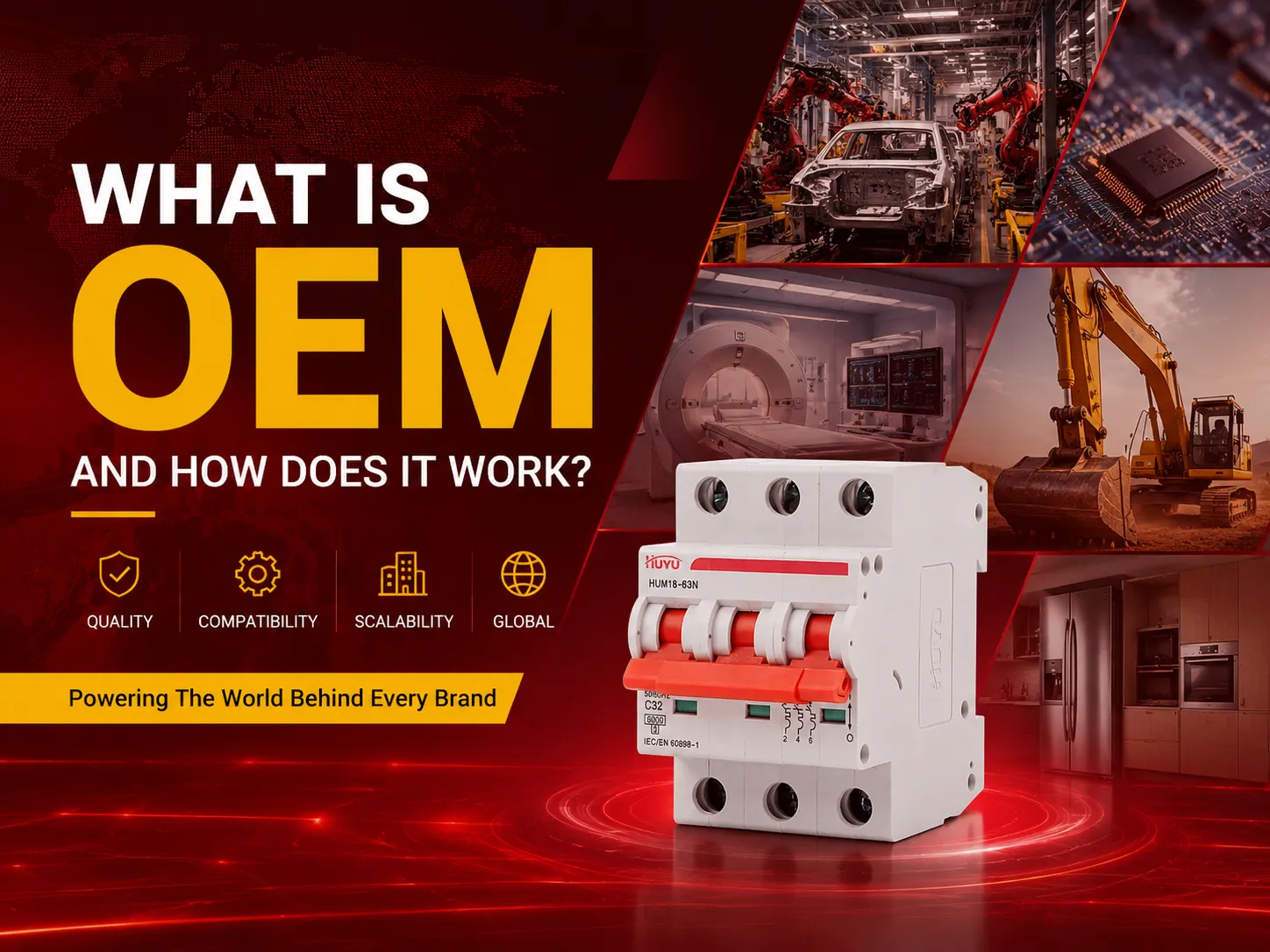
A Texan electrical contractor had a commercial project last year that required 500 custom-labeled circuit breakers; the contractor had specifications, delivery deadlines and certifications in place but no manufacturing plant. He had to go to an OEM (Original Equipment Manufacturer) who manufactured the breakers to the specifications he supplied and identified them with his company’s name and model number. The contractor’s customer never knew there was a third party.
When you multiply the example above by the number of industries – automotive, electronics, medical devices, heavy equipment – you can see how the Original Equipment Manufacturer (OEM) model is part of the world economy. The vehicle you drive has thousands of components produced by OEMs. Your cell phone may have been assembled with help from an OEM. The branded appliance located in your kitchen could be constructed completely from an OEM factory. As such, developing a comprehensive understanding of OEMs will not only improve how you use OEM in your own life but will also create understanding of how much of modern manufacturing operates.
What Does OEM Actually Mean?
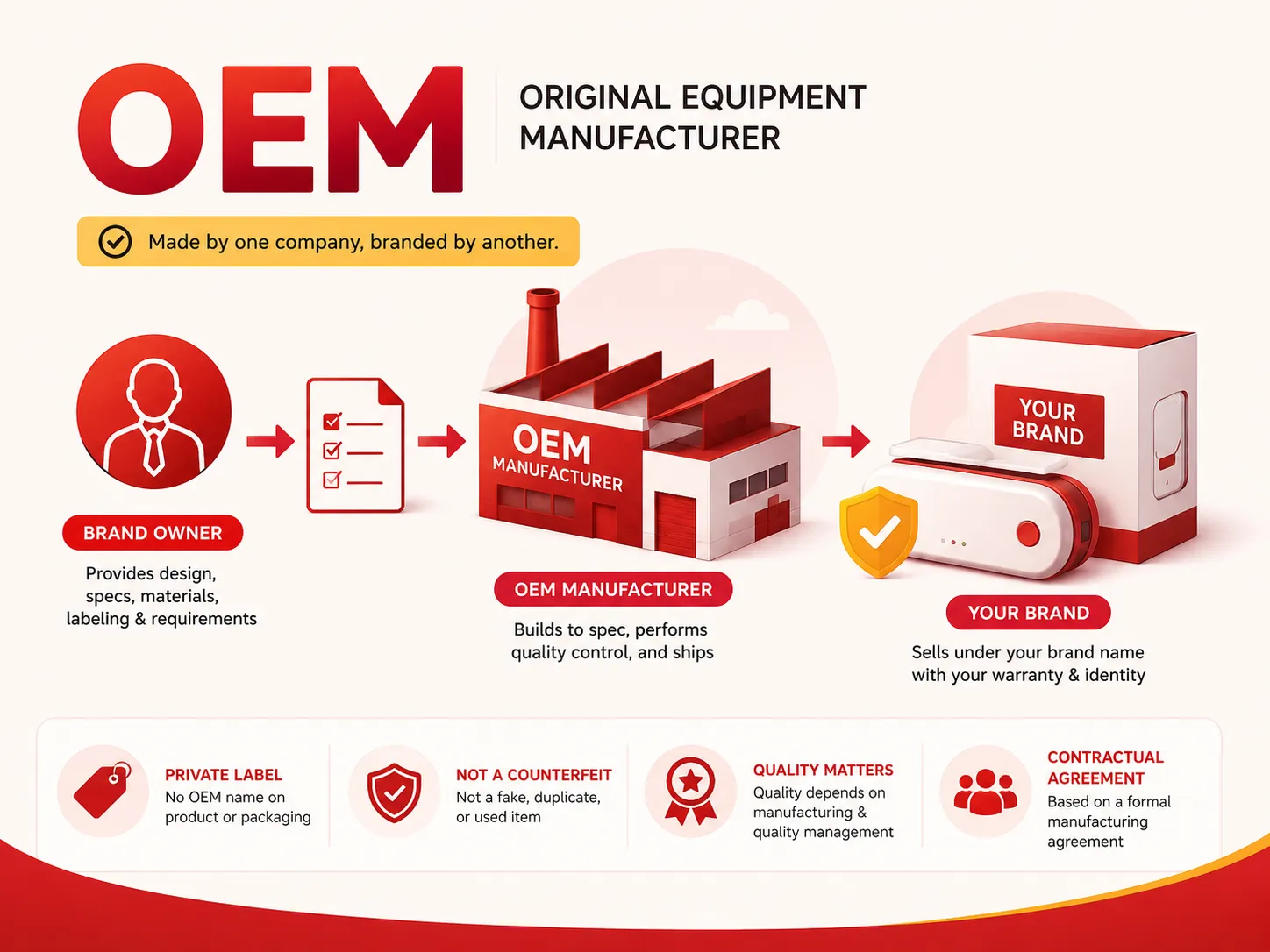
OEM An Original Equipment Manufacturer (OEM) develops a product to be branded and sold under another company’s brand name. The company ordering their product will provide the OEM manufacturer with the design specification to follow, which will include materials to use, performance specifications and required labeling. The OEM will build the item, perform quality control tests, and ship them to the buying company with its logo on the item nameplate.
This should be treated as an agreement for private label manufacturing, with the OEM being the actual manufacturing facility and the buyer being the brand associated with the finished good. The finished good has the identity, warranty and market presence of the buyer. There should be no indication of the OEM’s name being associated with the finished good or the packaging of the finished good.
Clarifying a common misunderstanding is essential — an original equipment manufacturer (OEM) product does not mean a counterfeit, a duplicate, or a used item. It refers to a product that has been produced according to specific standards by an appropriate factory as part of a contractual agreement between the product’s manufacturer and brand owner. The quality of any given product depends on its manufacturing process and the manufacturer’s quality management systems, rather than on whether the name on the label matches the name on the factory door.
OEM Across Industries: A Universal Model with Local Variations
The Original Equipment Manufacturer (OEM) business model extends to virtually all industries that manufacture material goods. Although the basic concept remains constant (one company creates the design and a different company builds the product), industry specific practices, terminology, and economic factors differ.
Automotive: The Industry That Defined OEM
The use of the term OEM originated in the automotive manufacturing industry and is still commonly found within that sector today. The average modern automobile consists of approximately 30,000 separate components; however, no one company both designs and builds these components as a factory does. Instead, Toyota, Ford, Volkswagen and other similar companies are referred to as integrators or assemblers.
The engine control module, braking system, airbag sensors, infotainment system, wiring harnesses, and many more parts are designed by engineers at car manufacturers but manufactured by OEMs through their vast supply chain of manufacturers.
These are companies – Bosch and Denso, for example – that manufacture parts to order. If you purchase an OEM brake caliper to replace a defective caliper in your vehicle, this caliper is from the original manufacturer and made using the same design and materials as the original part. OEM parts will have received original approval from the time the vehicle was originally manufactured whereas after-market parts are copies and may or may not conform to the same design or material standards as their OEM counterparts.
OEM parts are often sold at a higher price in the automotive aftermarket because when someone buys them, they are typically buying the peace of mind that only OEM parts meets the original manufacturer’s specifications (OEM). When a collision repair shop orders OEM body panels, they know that they will fit correctly, be the same thickness as those that were originally on the vehicle, and be coated the same as those that were originally on the vehicle. Aftermarket body panels may not meet all of these criteria.
Consumer Electronics: The Invisible OEM Giant
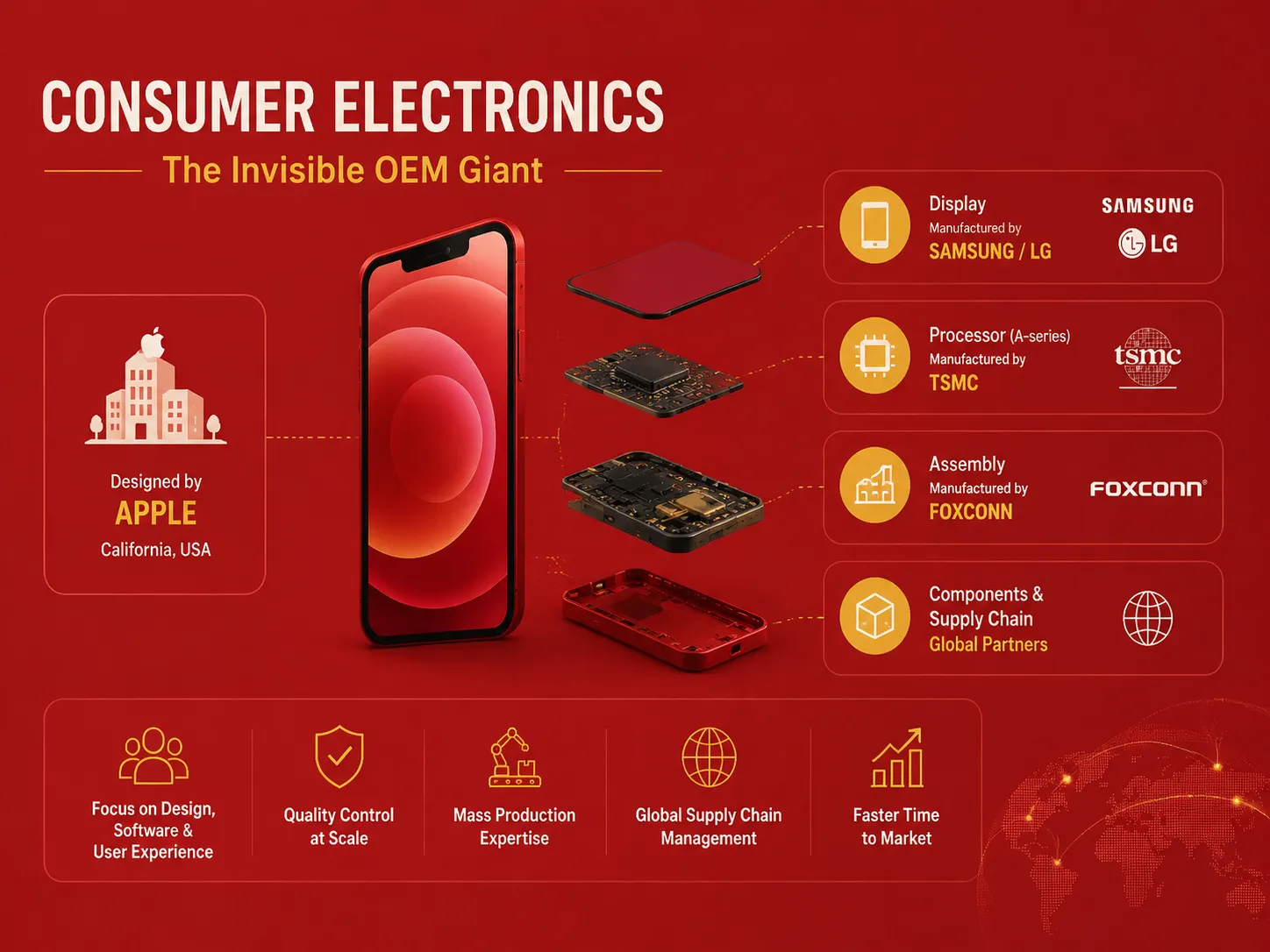
As the consumer electronics industry is built around original equipment manufacturer partnerships, nearly all consumers do not understand that. Apple, for example, designs the iPhone in California but has Foxconn (an original equipment manufacturer based mainly in China) assemble them. The A-series processor in the device is designed by Apple and manufactured by TSMC (another type of original equipment manufacturer relationship). The iPhone’s display panel is built by either Samsung or LG. Within each of these manufacturers, Apple will provide specifications of proprietary parts, but Apple’s name will not appear on any of the end products.
Consumer electronics companies can devote tremendous energy to developing impressive designs, designing excellent software, and offering a fantastic user experience with their OEM partners by utilizing the significant production capacity andan experienced supply chain partner to gain access to the best production resources associated with that particular product. Working with an established electronics OEM is not only about outsourcing your company’s assembly. In fact, there are some electronic OEMs who have many years of experience in supply chain management, quality control at scale, and engineering processes that it would have taken you decades to establish internally.
Medical Devices: OEM Where Regulation Defines the Relationship
There are many different types of manufacturers that provide high quality products in accordance with all applicable government regulations, including those from the FDA, however, there are few examples of companies manufactures high quality medical devices, including MRI machines, instruments, and implants, meeting the specifications of their direct customers.
All OEMs must adhere to both the manufacturer’s and the end-users requirements when manufacturing a part, but in addition, OEMs must also meet the requirements of FDA, ISO, and the MDR.
The automotive sector has a lot of OEM relationships that require extensive technical collaboration. There may be a startup company that has created a new type of diagnostic technology, but does not possess any clean room manufacturing capability, sterilization validation or regulatory documentation infrastructure in place to get their product to market. It is typically an experienced OEM who has all of this infrastructure in place and will help the startup bring their product to market. This relationship usually has a quality agreement in place which includes design controls, change management procedures and adverse event report handling, all of which require significantly more than a standard commercial contract.
Heavy Equipment and Machinery
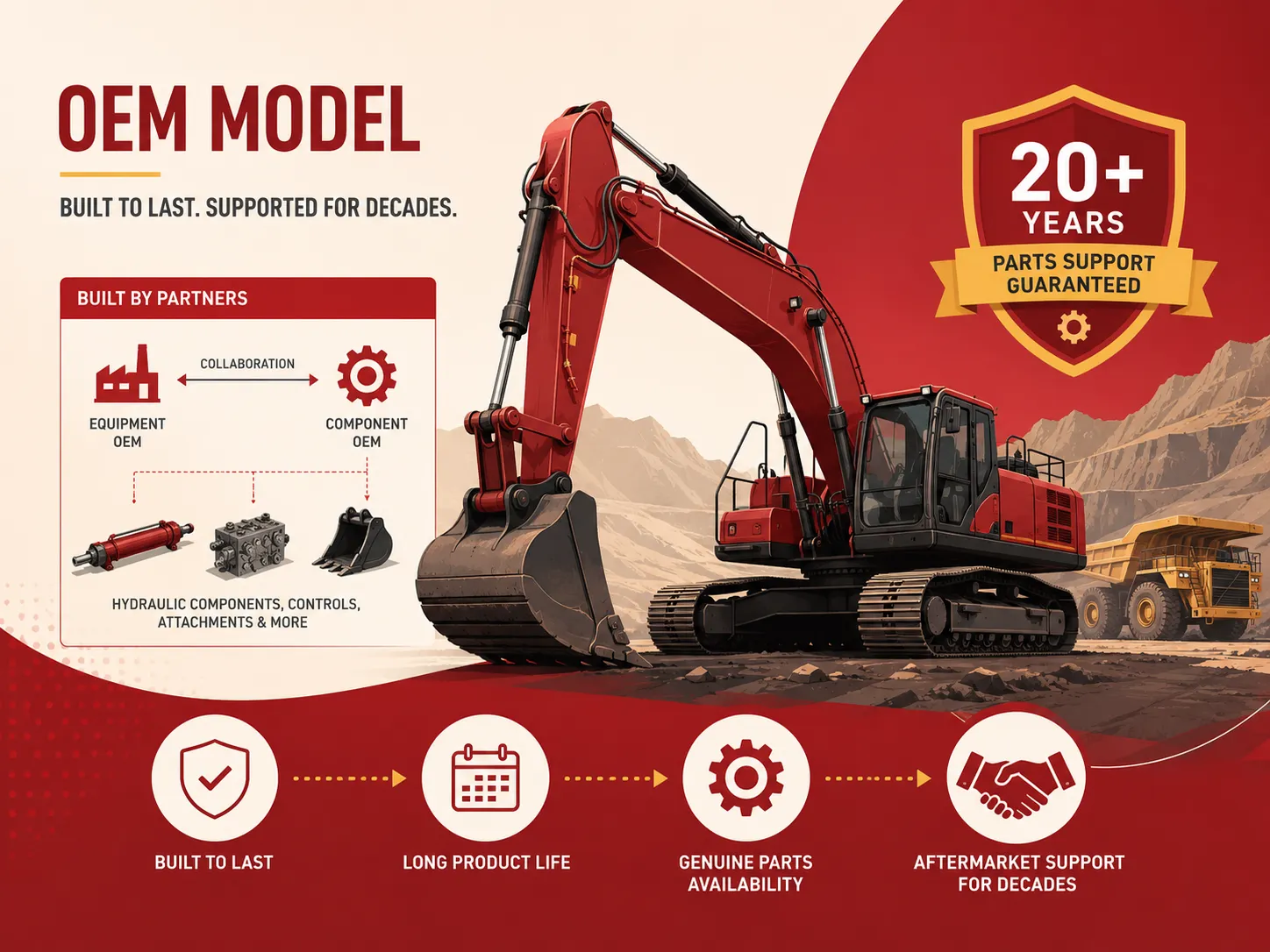
The equipment manufacturers, such as John Deere and Caterpillar, design and build most of their major parts, but many of the hydraulic components, controls, and attachments that they need to make a complete machine are made by outside suppliers. For example, an excavator’s hydraulic cylinder may be designed by the excavator OEM’s engineering team but manufactured by a hydraulic equipment OEM that sells this type of hydraulic component to several other types of equipment OEMs — and does so without changing the basic design of the part.
The OEM Model of Heavy Equipment includes extensive product life spans along with an expectation that necessary spare part availability will continue for many decades into the future after the original unit was no longer produced. For example, a Mining Truck OEM Supplier may have contractually guaranteed 20+ years of replacement parts support to their customers from when the last complete truck was shipped out of the factory. This aftermarket support is a large part of the value-based offering of OEMs supporting these manufactured goods in heavy industries.
Aerospace and Defense
Safety regulations and national security considerations dictate to OEM model in the field of aerospace. Boeing and Airbus are the most visible brands; however, there are many other OEMs around the world that manufacture components for aircraft, including landing gear, avionics and cabin interiors. The relationship between these OEMs and their aircraft is governed by the strict quality management rules established by AS9100, which is an aerospace specific standard based on the ISO9001 standard.
An aerospace OEM must demonstrate process control, traceability of every material back to its mill heat number, and the ability to manage engineering changes through a formal configuration control system. The cost of failure in this industry is absolute, which is why aerospace OEM partnerships are among the most carefully audited and closely managed in all of manufacturing.
Furniture, Appliances, and Consumer Goods
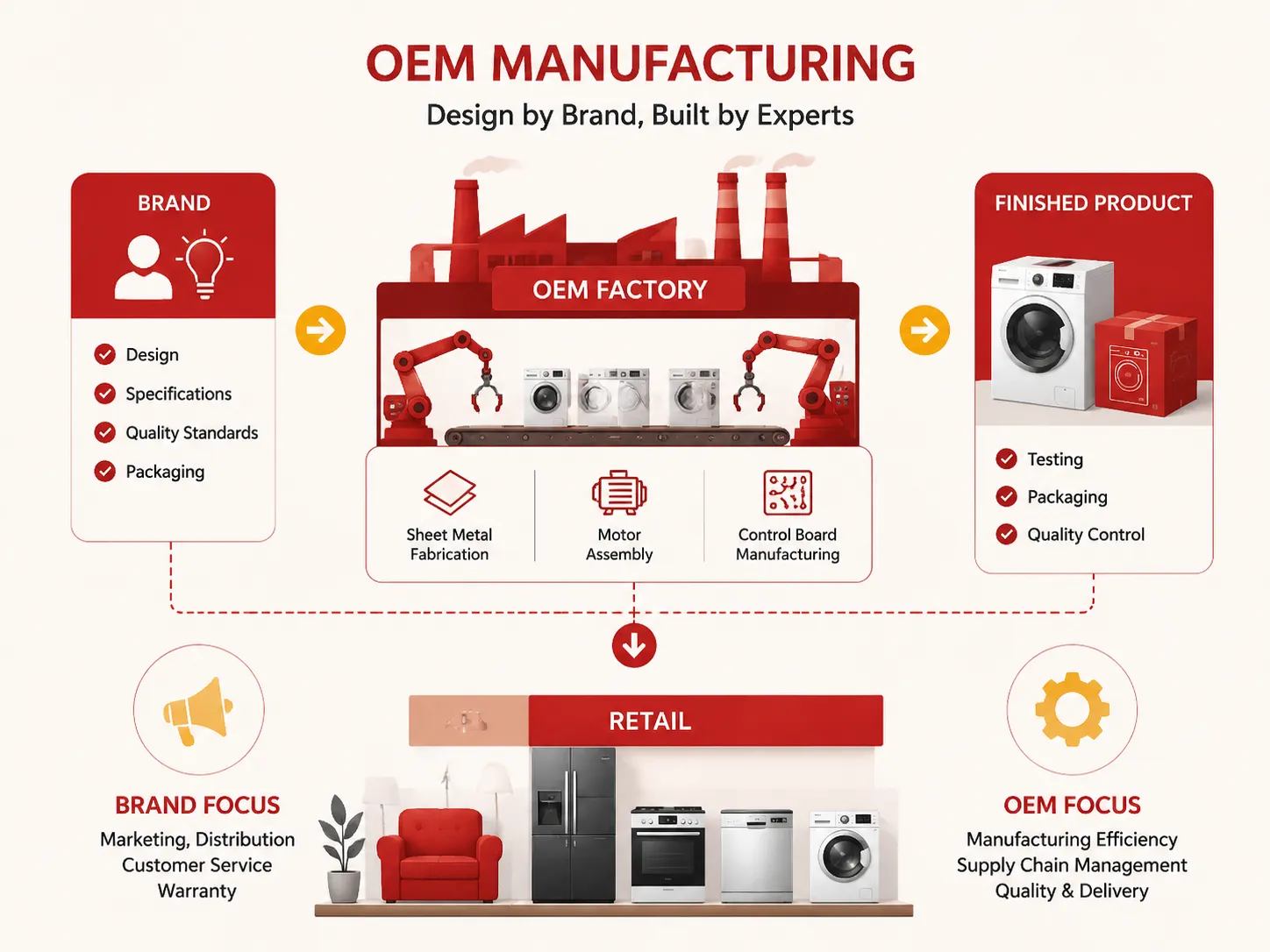
At the consumer end of the spectrum, OEM manufacturing powers much of the branded furniture, kitchen appliances, and home electronics that fill retail stores. A well‑known appliance brand may not own any of its own production facilities. Its washing machines are produced by an OEM factory that specializes in sheet metal, motor assembly, and control board manufacturing. The brand provides the design, the color specifications, the energy efficiency targets, and the packaging layout. The OEM factory produces, tests, and packages the finished unit.
This model allows brands to compete on marketing, distribution, and customer service while their OEM partners compete on manufacturing efficiency and supply chain management. It is the dominant model in categories where the manufacturing process is well understood and the brand differentiates on features, design, and warranty rather than on proprietary production technology.
Electrical and Industrial Equipment
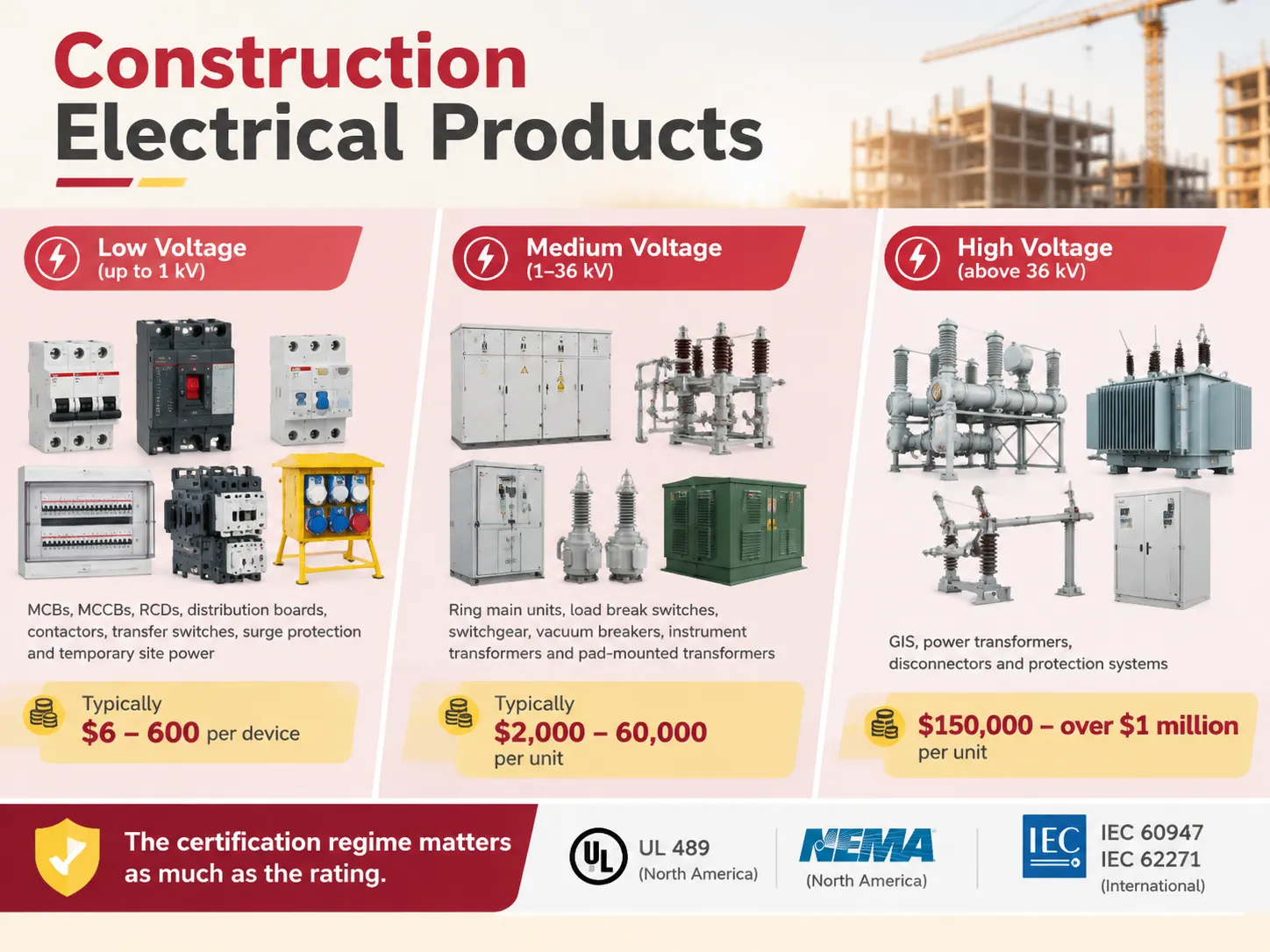
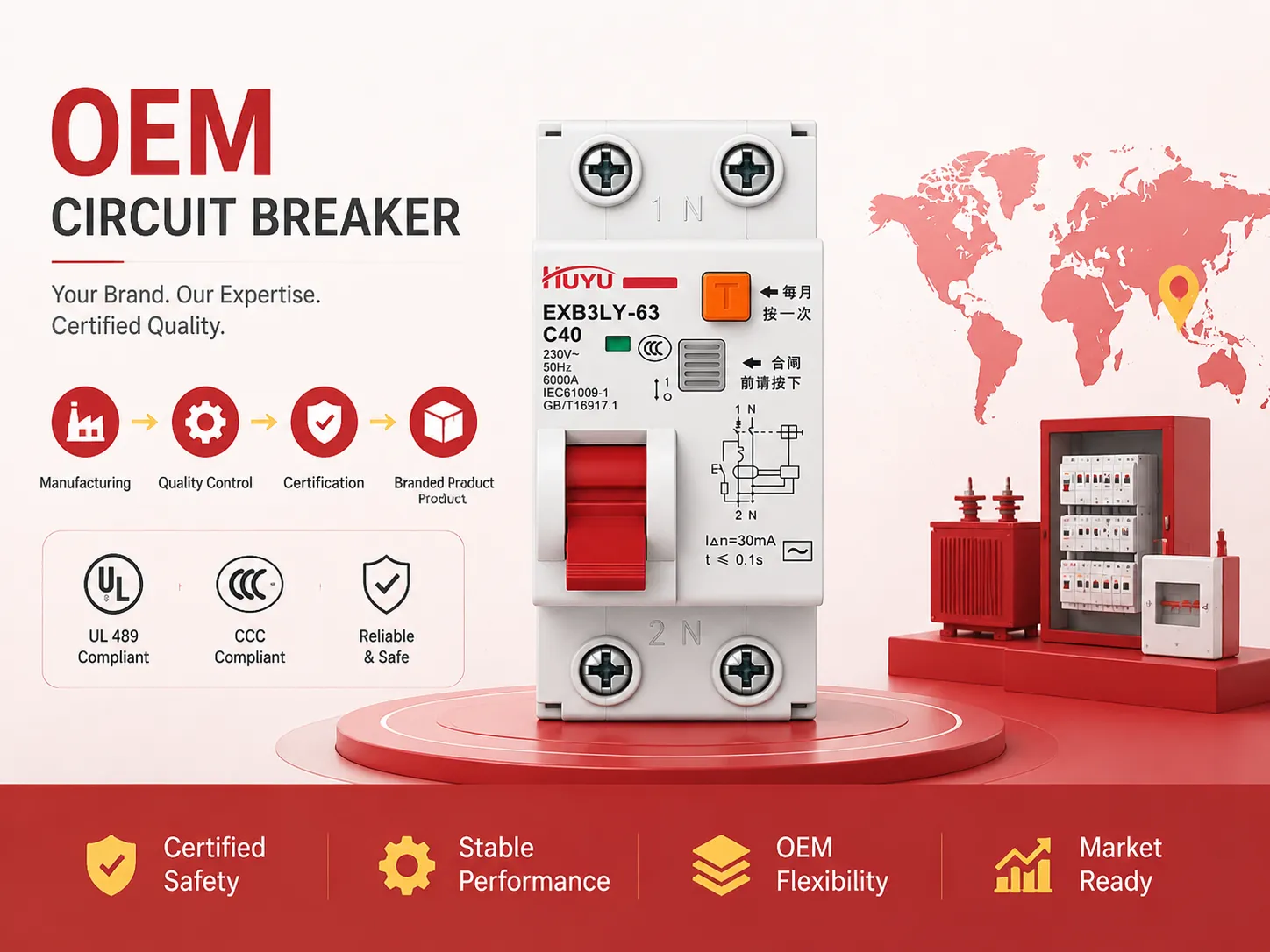
The OEM model is deeply embedded in the electrical industry. Circuit breakers, panelboards, switchgear, transformers, and wiring devices are frequently produced under OEM arrangements. A regional electrical distributor can offer a complete branded product line without building a factory, because an experienced OEM manufacturer provides the production capability, the existing certifications, and the quality management system needed to produce compliant, labeled products.
For a concrete example of how this works in a specific certification framework, our guide on what UL 489 breakers are explains the standard that any OEM‑produced breaker must meet before it can be legally installed in North America.
OEM vs. ODM: A Distinction That Shapes Business Strategy
A critical distinction for any buyer evaluating manufacturing partnerships is between OEM and ODM:
- OEM (Original Equipment Manufacturer): The Purchaser is the owner of the design, and the Manufacturer fabricates the product according to the exact specifications of the Purchaser. The intellectual property — such as engineering drawings, bills of materials, and test specifications — is the property of the Purchaser. The Manufacturer may not sell the same product to any other Customer.
- ODM (Original Design Manufacturer): The design is owned by the manufacturer. The buyer has put their brand on a product they have found in the manufacturer’s current catalog with minor cosmetic/custom changes. The design/tooling is still owned by the manufacturer for the purpose of being able to sell similar items to other buyers.
If a buyer requires exclusivity and a unique product, the OEM method can give them a significant amount of control but will take longer to develop. An ODM option will get their product to market quicker, but may lack differentiation of the product versus similar products available on the market. A company that is introducing a premium circuit breaker that has a very specific trip point and unique terminal design would take the OEM path. If a company is entering a price-sensitive marketplace with a standard product, they may choose an ODM path in order to market the product more quickly and at a lower price.
What to Evaluate When Selecting an OEM Partner
Selecting an appropriate OEM supplier is a choice that lasts many years after the sale of product(s), warranty claims, and brand reputation. There are certain criteria to consider within every industry:
- Existing certifications. Manufacturers that have both ISO 9001 + relevant product-specific certification have shown compliance with international standard on their quality systems. In regulated industries (e.g., medical, aerospace, electrical) this is not negotiable.
- Category experience. The manufacturer that has manufactured other customers the same type of goods is knowledgeable about the tooling, calibrating, common failures and tests needed to qualify its product. Consequently, this experience will shorten your time to develop and produce your item in addition to presenting fewer surprises when it comes time to test the product for certification.
- Transparency. A dependable OEM collaboration has test report included with all shipments, is open to factory visits, and provides documents that show where a product originated from (in terms of raw materials). Willingness to not provide any testing information or the ability to access their factory prior to sending product is an indicator that a company has issues with developing quality products.
- Engineering and communication capability. Being able to engage in a discussion about a technical drawing, offer suggestions for designing around costs, and have solid communication skills that let you speak in the buyer’s language will all directly impact the project duration and quality of the finished product.
- Supply chain visibility. Knowing where a manufacturer obtains raw materials such as metal, electronics, or plastic can instill confidence into quality control and provide evidence to support requirements for warranty and certification.
References
- ISO 9001:2015 — Quality management systems — Requirements. International Organization for Standardization.
- ISO 13485:2016 — Medical devices — Quality management systems — Requirements for regulatory purposes.
- SAE AS9100D — Quality Management Systems — Requirements for Aviation, Space, and Defense Organizations.
- U.S. Food and Drug Administration — Medical Devices — Regulatory framework for medical device OEM manufacturing.
- Investopedia — Original Equipment Manufacturer (OEM) — Definition and explanation of OEM business model.
- UL Solutions — Global safety certification organization for electrical and industrial products.
Frequently Asked Questions
Does OEM mean original?
OEM means Original Equipment Manufacturer”. Original means that the equipment is being built according to the original specifications given to the manufacturer by the buyer. The term OEM does not imply that the OEM brand name will appear on the product itself.
What does an OEM product mean?
A product that has been produced according to the specifications of a different company is known as an OEM product. The OEM product may be produced in many different places, and the quality and design are specified by the buyer’s specifications exactly as they were on day 1 of the manufacture of the OEM product regardless of where the OEM product was manufactured.
Which is better, OEM or original?
An OEM product is the original product or item developed according to the original design characteristics except for the fact that they were assembled in a different manufacturing facility. Therefore, regardless of who owns the manufacturing facility, quality of the OEM product is based upon the quality requirements of the specification and quality system.
What is OEM vs ODM?
OEM meaning that the design is owned by the purchaser and the manufacturer builds it according to the specifications provided by the purchaser. The manufacturer carries the design on their designs and the purchaser puts their brand name onto the designed item selected from the manufacturer’s catalogue. The major differences between OEM and ODM are in terms of exclusivity and design control for OEM and faster time to the market and lower initial investment for ODM.
The OEM model is one of the fundamental building blocks of modern manufacturing. It separates the act of designing a product from the act of building it, and it allows companies to specialize — one in engineering and brand building, the other in production efficiency and quality control. From the automotive assembly line to the medical device cleanroom to the electrical panel shop, the OEM relationship delivers products that meet a specification, carry a certification, and bear a brand that the end customer trusts. Understanding OEM meaning and how OEM works is an essential part of navigating the global supply chain, whether you are a buyer, a specifier, or simply someone who wants to know who really made the device in your hand.