
EXB9L-125 Type B & B+ RCCB | DC Leakage Protection for EV, PV and Drives
Smooth DC Leakage Protection — Type B and B+ for EV Charging, PV and Drives
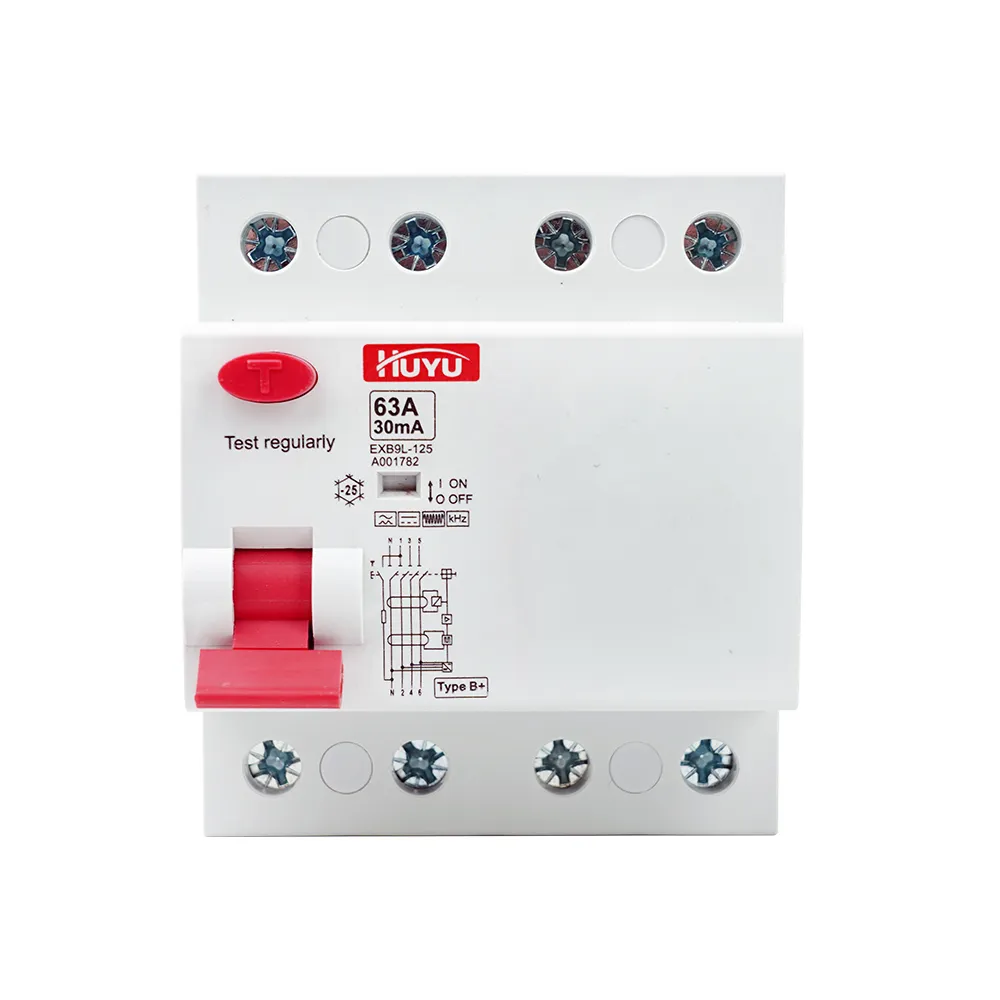
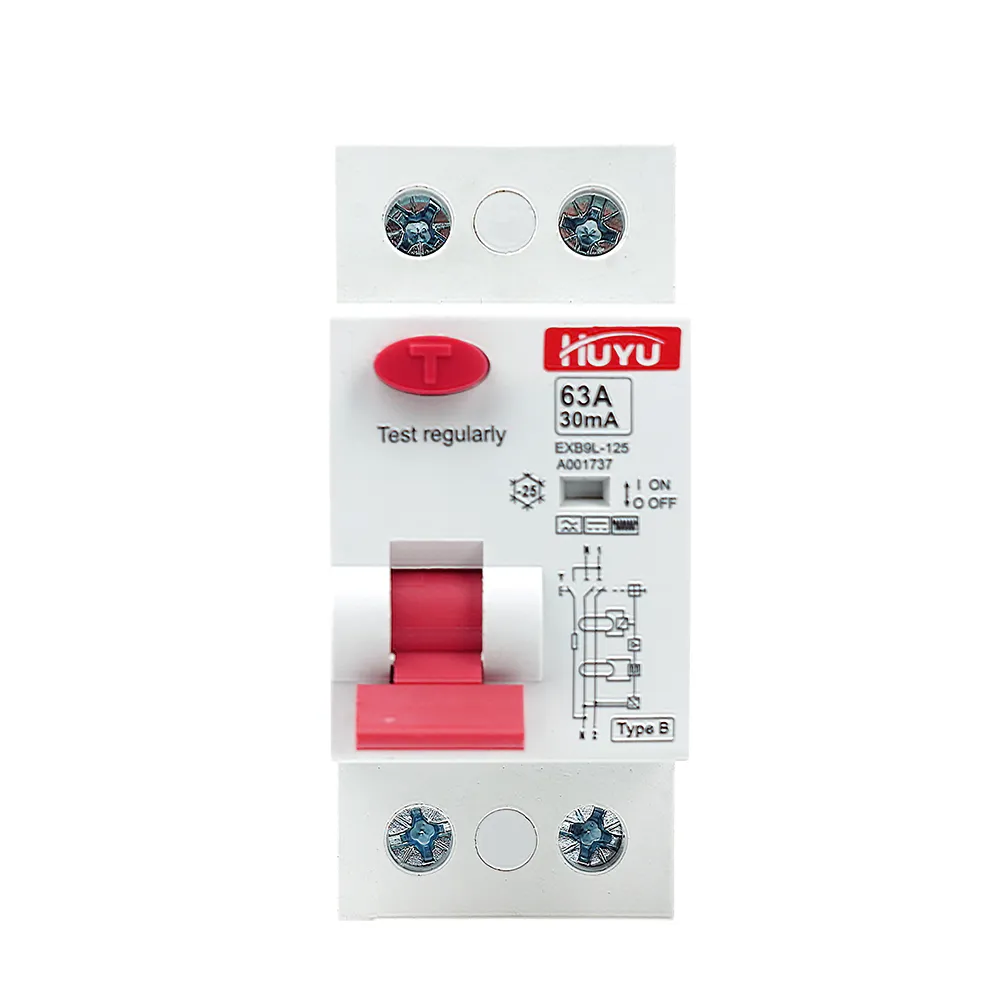
The EXB9L-125 Type B and Type B+ are residual current circuit breakers built for equipment with DC components: EV chargers, photovoltaic inverters and variable-speed drives. Type B detects AC, pulsating DC and smooth DC residual currents up to 1kHz; Type B+ extends detection to 20kHz, covering the high-frequency leakage these systems produce.
Model
EXB9L-125 Series — Type B / Type B+ RCCBEXB9L-125 1P+N / 3P+N · Type B · Type B+ · 16-63A · 10kA
IEC/EN 62423 & IEC/EN 61008-1 · Type B / B+ · smooth DC detection · DIN rail
Product Details
- Type B and Type B+ residual current circuit breakers for circuits containing DC components and rectifiers.
- Type B detects sinusoidal AC, pulsating DC and smooth DC residual currents, plus alternating residual currents up to 1000Hz.
- Type B+ meets the full Type B function and adds tripping values defined up to 20kHz, below 420mA.
- Rated current 16, 25, 32, 40 and 63A; sensitivity 30mA (default), 100mA and 300mA.
- Electronic measuring principle for accurate residual current detection and fewer unwanted trips; no magnetisation of the trip unit.
- Conditional rated short circuit current 10kA; residual making and breaking capacity 500A (16-40A) or 630A (63A).
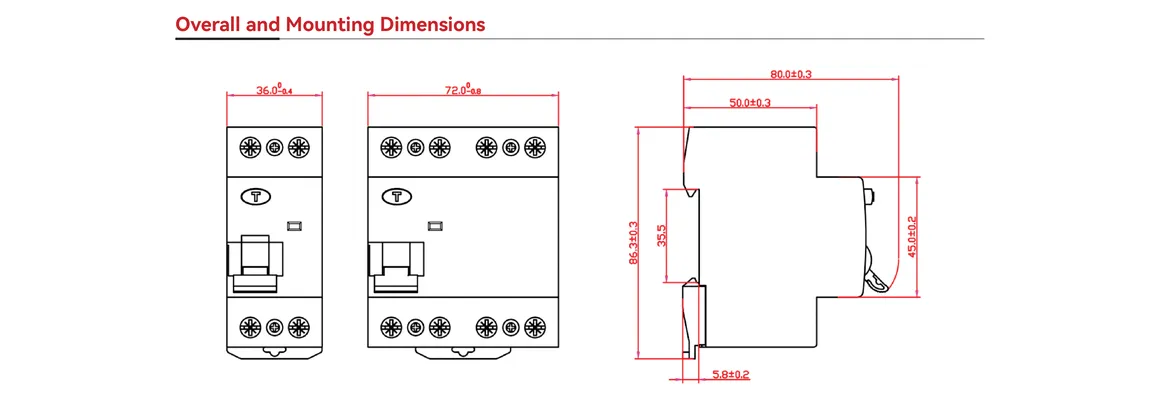
- 1P+N (230/240V) and 3P+N (400/415V); insulation voltage 500V; impulse withstand 4000V; IP20.
- DIN rail 35mm mounting, terminals for 25/35mm² cable and 10/16mm² busbar, torque 2.5N·m.
Product Information
Key Features & Typical Use
Detects What Type A Cannot
Devices of Type A cannot detect smooth DC residual currents. Nevertheless, when devices emitting smooth DC to the earthing pathway are concerned such as electric vehicle chargers, photovoltaic inverter, and DC drives, a Type B device is very much necessary. In this respect, the EXB9L-125 is able to ensure this detection up to 63A.
Type B+ to 20kHz
Modern power electronics generate high-frequency leakage, which is considerably beyond the 1kHz limit of typical Type B detection. Type B+ has expanded the tripping limits for leakage currents to 20kHz (below 420mA), thus accommodating the switching frequencies generated by today’s inverters and chargers.
Electronic Measurement, Fewer False Trips
The principle of measurement is more advanced as it is based on the use of electronics instead of magnetism, thus enhancing the performance of residual current detection and minimising false alarms as well as preventing the magnetism that might occur in tripping devices with time.
Built for the New Energy Installation
All three classic DC applications – Charging systems for electric vehicles, solar inverters, and variable guidance mechanisms – can all be governed through one unit that has different forms of pylons and current sensitivity depending on the selected application.
Specifications
| Parameter | Details |
|---|---|
| Series | EXB9L-125 Residual Current Circuit Breaker (Magnetic) |
| Types | Type B · Type B+ |
| Standards | IEC/EN 62423 & IEC/EN 61008-1 |
| Detected Waveforms | Type B: sinusoidal AC, pulsating DC, smooth DC, AC residual currents up to 1000Hz · Type B+: additional tripping values up to 20kHz (below 420mA) |
| Rated Current In | 16, 25, 32, 40, 63A |
| Rated Sensitivity IΔn | 0.03 (default), 0.1, 0.3A |
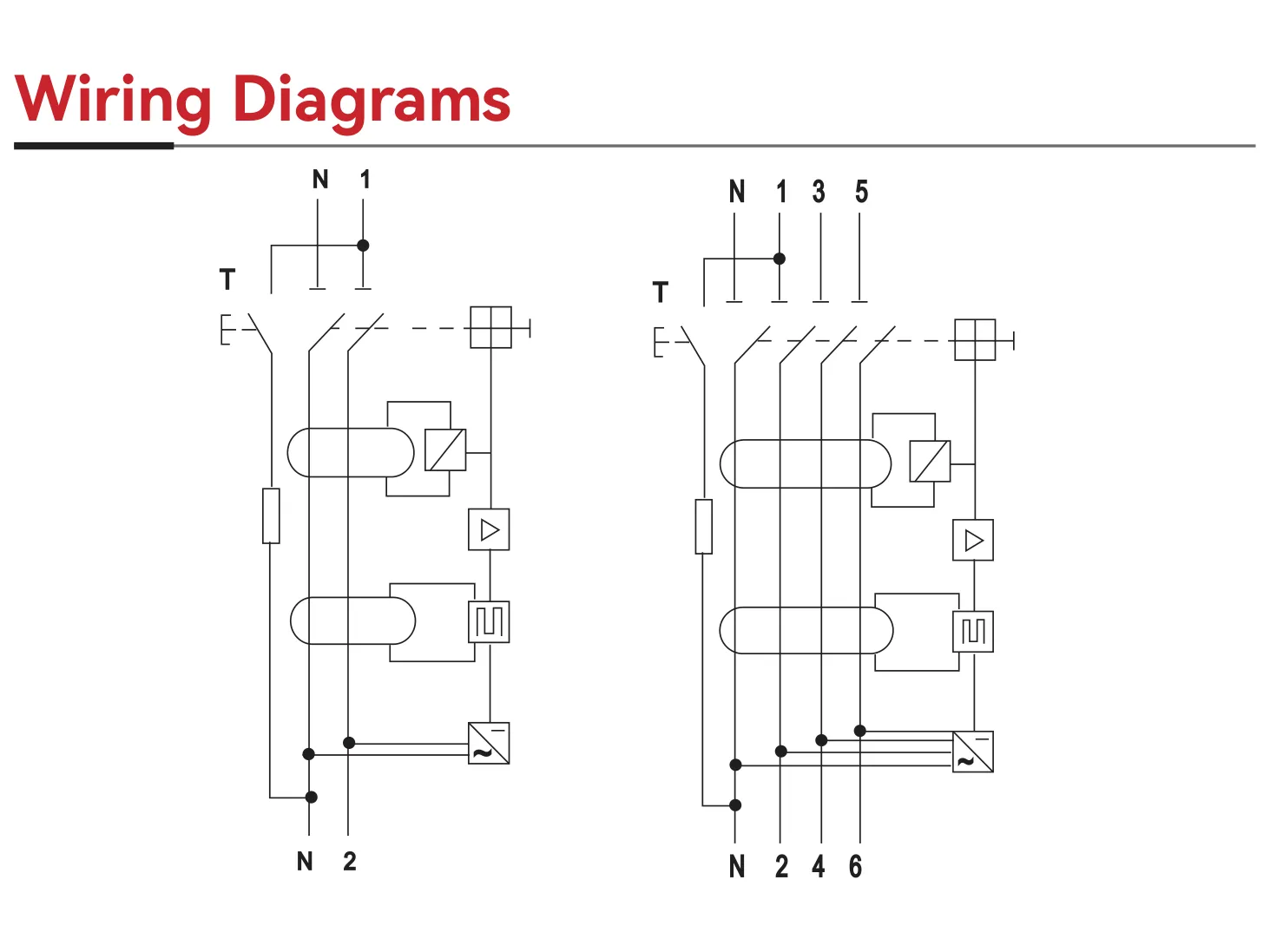
| Poles | 1P+N, 3P+N |
| Rated Voltage Ue | 1P+N: 230/240V~ · 3P+N: 400/415V~ |
| Insulation Voltage Ui | 500V |
| Residual Making & Breaking Capacity IΔm | 500A (16-40A); 630A (63A) |
| Conditional Short Circuit Current Inc/IΔc | 10000A |
| Break Time under IΔn | ≤ 0.1s |
| Impulse Withstand Voltage Uimp | 4000V |
| Dielectric Test Voltage | 2kV, 1 minute |
| Electrical / Mechanical Life | 4000 / 4000 operations |
| Terminals | Cable 25/35mm² (AWG 18-3/18-2); busbar 10/16mm²; torque 2.5N·m |
| Mounting / Protection | DIN rail EN 60715 (35mm) · IP20 · -25°C to +40°C |
EXB9L-125 Type B / B+ — Protecting Circuits Where DC Leakage Is Real
A residual current circuit breaker (RCCB) operates on the principle of comparing the current going out through the circuit with the returning current. It is important to note that this comparison is valid only if the current leakage is alternating. If a rectifier or an inverter is in signal with the system, it can happen that the voltage in the leakage circuit can have a smooth DC component. However, smooth direct current is incapable to induce loss of magnetic flux in the circuit to activate conventional residual current detection, hence a type A RCCB can remain operational even in the presence of DC leakage.
It is just about the same with the energy technologies of today. The chargers for electric vehicles convert the prevailing power supply, the solar inverter changes the DC supplied from the panel, the variable speed drives produce the DC link and go back to the AC. The EXB9L-125 Type B type of device is able to react to normal AC electric currents and also to two types of DC: pulsating and smooth with the ability to detect the alternation of up to 1 kHz; while the newer version of this device, Type B+, increases the trip current up to 20 kHz thus ensuring that the device detects leakage current produced by modern devices.
At HUYU, we produce the EXB9L-125 Type B and B+ in-house, selling DC sensitive RCCBs at factory prices directly to suppliers of EV chargers, solar panel installers and manufacturers, drive and control panel OEMs and electrical wholesalers.
Factory-Direct OEM / ODM Manufacturer
We Manufacture, You Brand
Type B appliances require calibration via DC and mixed frequency residual current rather than a simple capacitor sensitivity test. For every production series incoming trip values are checked for DC and mixed frequency operation.
For EV charger and inverter manufacturers, we can deliver Type B test sets and provide consultation on coordination with their devices’ own DC residual current detection.
- OEM branding — marking, rating labels and cartons for charger and inverter brands.
- ODM options — 30/100/300mA sensitivities, pole variants and terminal configurations.
- Test documentation — DC and high-frequency trip test records supplied with each batch.
- MOQ — flexible quantities; Type B and Type B+ can be mixed with the standard range.
Buying Guide
When you work with a circuit that has a rectifier, inverter, or DC link, the rules change. If you are following the circuit for current rating, you won’t need to worry about the first type; just go with whatever equipment needs to be connected.
- Identify the equipment: EV charger, PV inverter or variable-speed drive → DC-sensitive RCCB required.
- Decide between Type B (to 1kHz) and Type B+ (tripping values to 20kHz) according to the switching technology of the equipment.
- Select the rated current — 16A to 63A for the circuit.
- Choose 30mA for personnel protection, or 100/300mA for fire and property protection.
- Select 1P+N or 3P+N to match the supply and the charger or inverter topology.
- Confirm coordination with the equipment’s internal DC monitoring where present.
- Request samples and test documentation before series rollout.
How We Support Your Business

OEM / ODM
Marking, sensitivity variants and DC test records for charger, inverter and drive manufacturers building certified assemblies.
Private label · DC test records · Sensitivity options

Wholesale
Factory-direct pricing on DC-sensitive RCCBs for distributors supplying the EV charging, solar and drive markets.
Factory pricing · Mixed orders · Global shipping

Distributor Support
Application guidance on DC leakage, Type B versus B+ selection and priority production for channel partners.
Application support · Selection tables · Priority lead times
Ready to Stock the EXB9L-125 Type B / B+ Range?
OEM/ODM, wholesale pricing and distributor support — one enquiry gets you a factory-direct quotation for Type B and Type B+ RCCBs for EV charging, photovoltaic and drive applications.
Frequently Asked Questions
Why is a Type B RCCB needed for EV chargers and PV systems?
This is because these systems generate smooth DC residuals that the regular Type AC and Type A devices can’t sense. An EV charger has its built-in rectifier that can inject the DC into the earth path, and in a solar system, the inverter works in the DC mode by definition. For this reason, a Type B device detects both AC and pulsating DC, as well as smooth DC leakage; hence, the protective performance is intact.
What is the difference between Type B and Type B+?
Both sorts of devices are able to perceive steady DC residual currents. Type B can react to DC currents up to 1000Hz; whereas B+ type performs complete functions obtained by type B with the range of disconnection currents expanded up to 20kHz, with current less than 420mA. Nowadays, the frequency of switching of modern power devices goes significantly beyond 1kHz, and the device type B+ can be used when there is leakage at high frequencies.
Can I use a Type A device with an EV charger?
Not the only protection available. Certain charging stations have built-in DC residual current monitoring process which means that the DC leakage does not go beyond 6mA, so a Type A device is allowed upstream. However, whether or not to use that type device depends on certification. Any time when DC level is not limited by developer equipment Type B device must be used.
What current ratings are available?
The Type B and B+ versions consist of devices 16A, 25A, 32A, 40A, and 63A in 1P+N and 3P+N systems which have the sensitivity of 30mA, 100mA, and 300mA. It has the capability of residual current making and breaking capacity of 500A in 16A-40A devices and 630A in 63A range with 10kA conditional short circuit current.
How does the electronic measuring principle help?
Unlike traditional methods of measuring the residual current waveforms using magnetic bias, an electrical measurement circuit achieves accurate detection of mixed AC and DC leakage and minimizes unwanted tripping. The functioning of this gadget does not depend on magnetic fields; hence the tripping unit does not get magnetized as in case of magnetically biased designs thus ensuring consistent sensitivity for the life of the device.