
If you request the price from five different companies for a 10 amp miniature circuit breaker, you will end up with five different sets of numbers. All of these numbers could be accurate. The 10 amp miniature circuit breaker is one of the least expensive devices in the electrical panel; however, the numbers vary significantly based on multiple factors like breaking capacity, brand, certification, order size, and market conditions. This guide helps demystify those figures for you, so you know how to assess the quote.
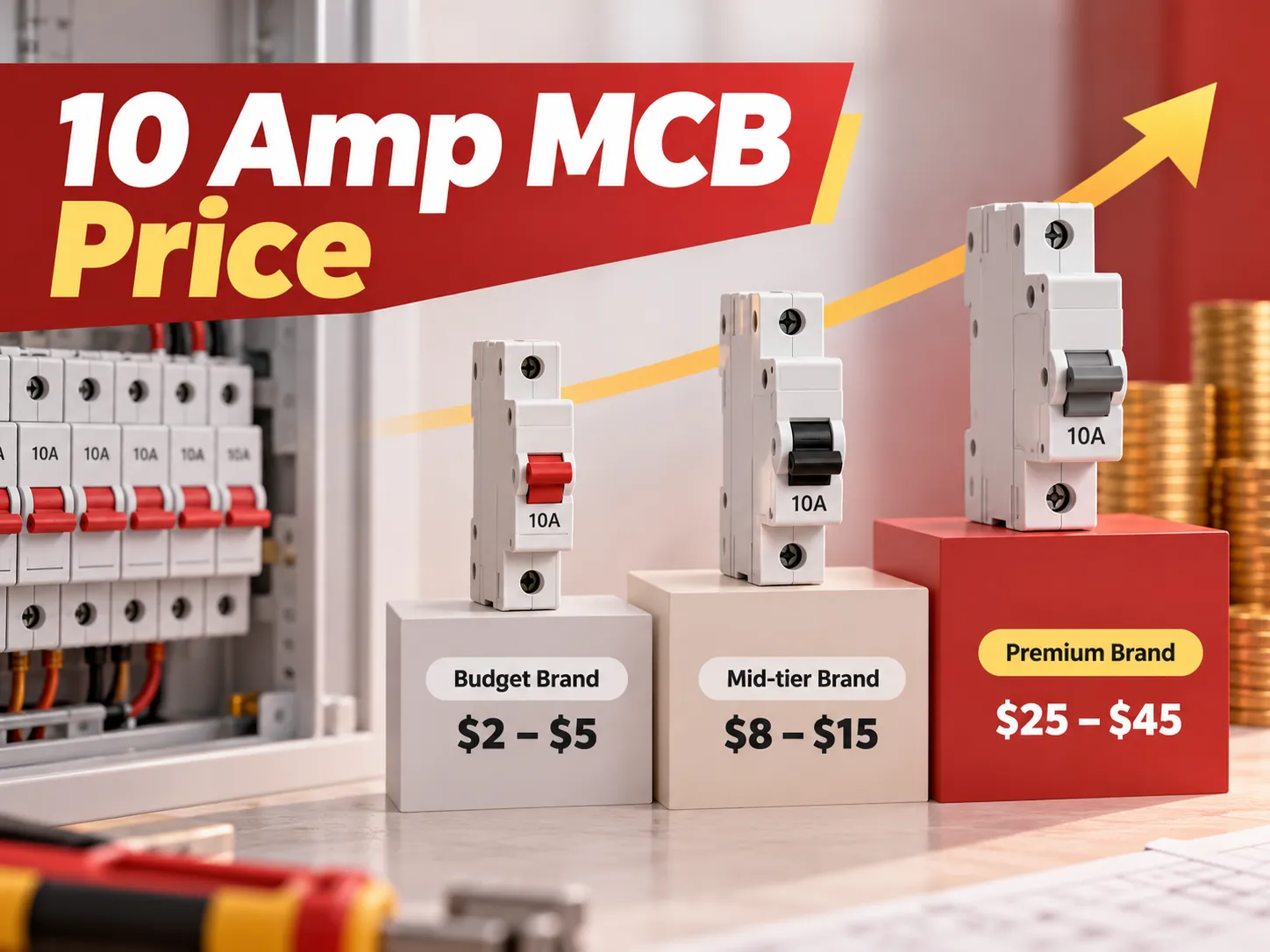
To answer briefly, budget suppliers charge around $2 to $5, mid-range ones $8 to $15, and premium MCB brands between $25 and $45. Buying wholesale or in carton quantities usually gives prices that are lower by 30 to 60% as compared to single item prices. MCBs installed in panels would cost between two to four times the price of the MCB itself.
What a 10 Amp MCB Actually Is
A 10 A MCB is a type of thermal-magnetic breaker that comes with its mounting in a DIN rail with nominal current rating of 10 A. In brief, the thermal component will take care of overloads while the magnetic one is responsible for short circuits. The toggle acts like a manual switch and has mechanical trip indicator. Most of MCBs conform to dimensions of 17.5 mm to around 18 mm in the case of single pole with voltage rating of 230/400 v AC. Besides, they are designed at power points established in the IEC standard for households and similar installations or the one applied in the industrial environment.
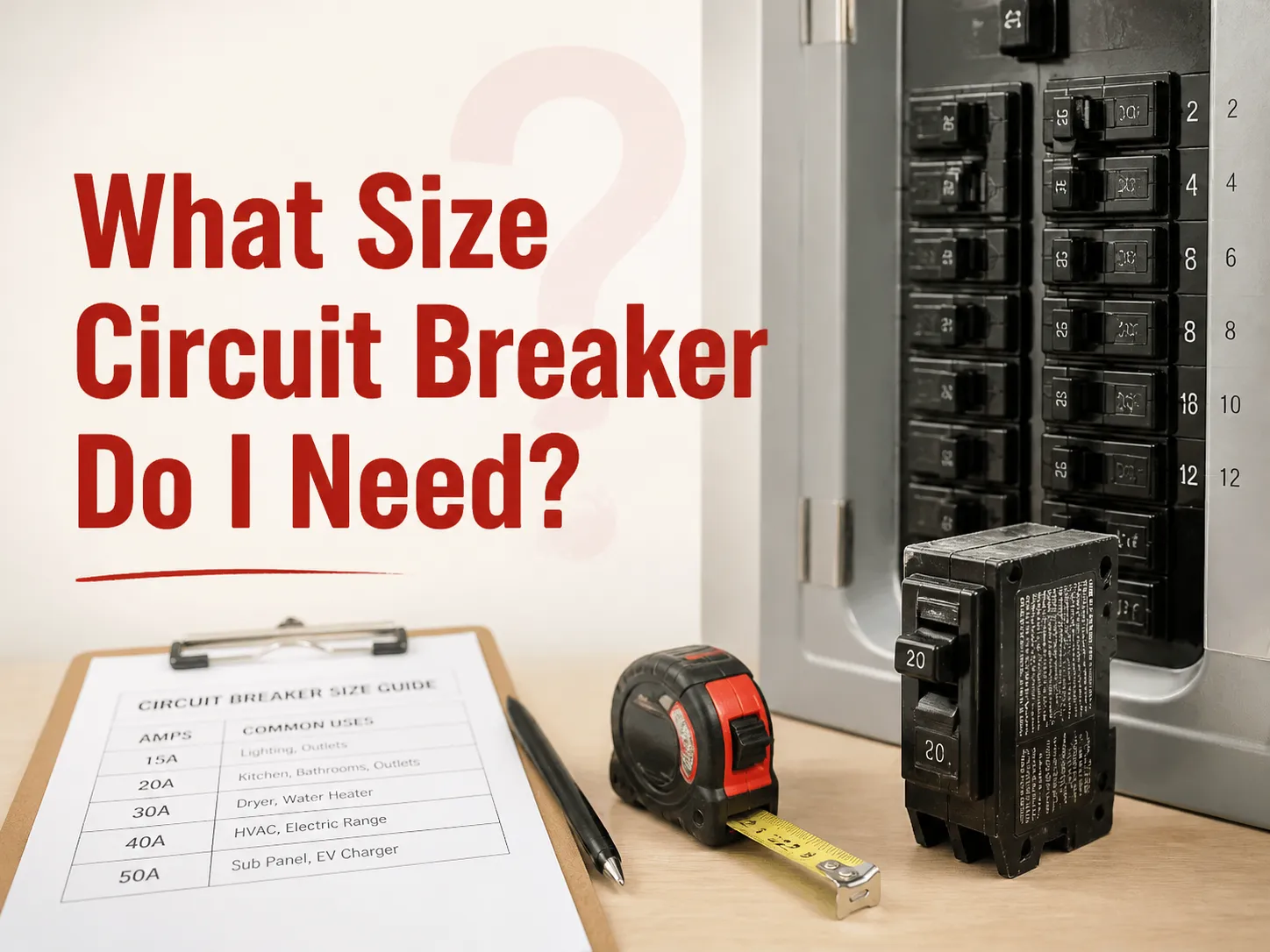
Practically speaking, the same rating can be employed in the previous cases. If buying MCBs for North America, you should remember that there is no such thing as 10 A breaker. According to the National Electric Code, the smallest branch circuit is 15 A on 14 AWG. That is why 10 A breaker is used mainly in control panels and IEC markets.A representative product from a wide-range supplier is this 10 kA miniature circuit breaker covering the 1–63 A range on an 18 mm module, which is the frame size the pricing tables below refer to.
The Price Bands You Should Expect
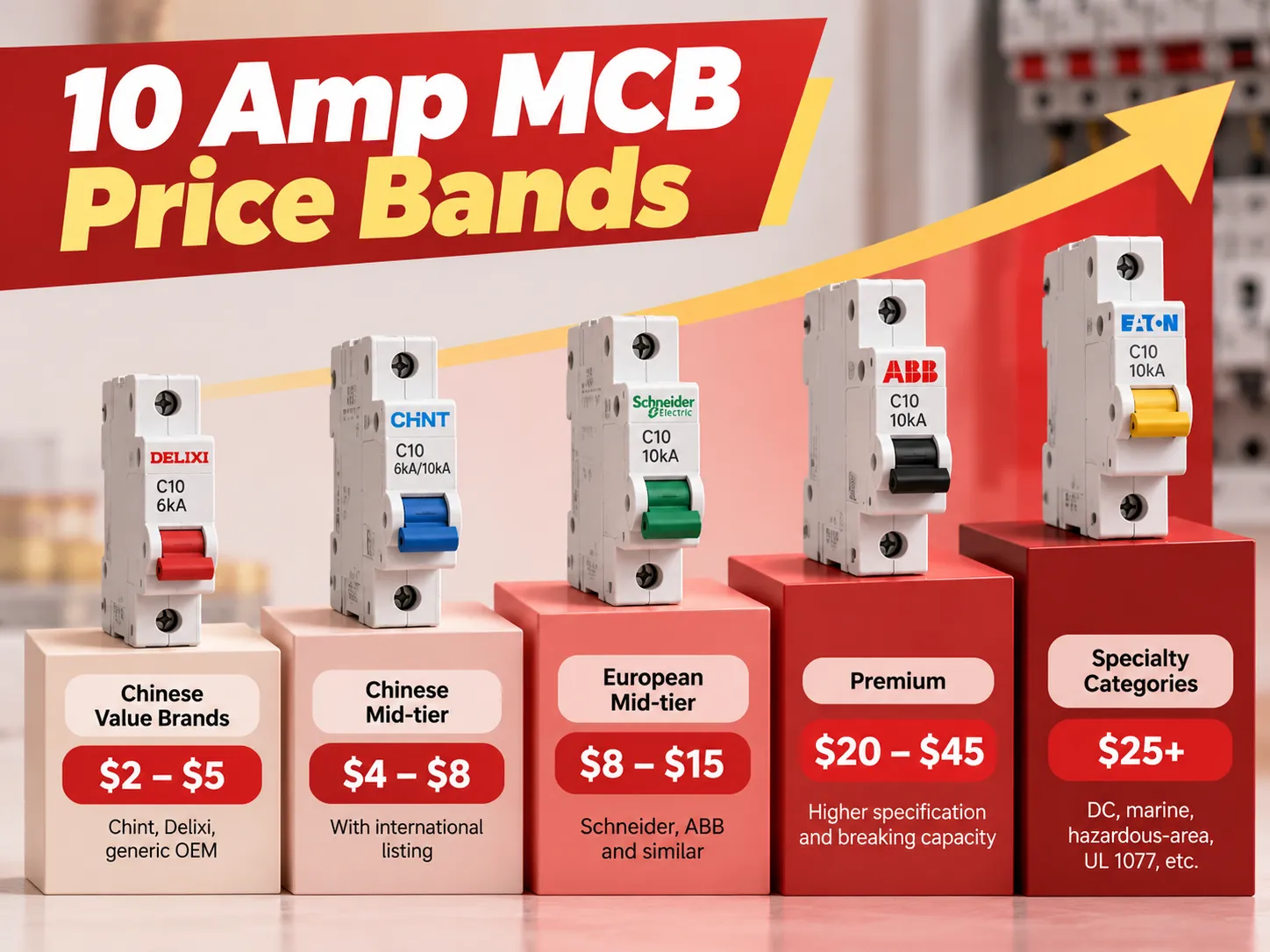
There are five different levels of prices available for a single pole 10 A MCB with 6 kA ratings:
- Value brands made in China (Chint, Delixi, or similar ones): from $2.00 to $5.00 for every single device. For example, the price list for a Delixi DZ47s 1P C10 block is claimed to be around ¥18 in China.
- Chinese ones situated somewhere in between Chinese and foreign brands: from $4.00 to $8.00.
- European mid-price brands popular for being sold in large quantities: from $8.00 to $15.00. For instance, Schneider Acti9 iK60N C10 with 10 kA rating costs $8.00-$12.00; and ABB SH200-C10 costs $10.00-15.00.
- High rating brands: from $20.
- Specialized products (DC, marine etc): from $25 or even more.
There are two important points to mention. The first point is that breaking rating is more important than brand for products in the low price range. In fact, the difference between 6 kA and 10 kA is real; and actually this difference explains most of the price difference. The second point is that the list prices do not mean anything.
Retail Versus Trade: The Same Device, Three Prices
The price difference between the cost paid by the consumer and the cost incurred by the manufacturer of the equipment exceeds what is normally expected. In China, for instance, the wholesale price of a single Delixi circuit breaker is about ¥18, while the price of an equivalent ABB circuit breaker is ¥60, and those of Schneider is ¥32. While taking into account retail prices, the consumer pays even more – for example, the cost of an Eaton FAZ-C10/1-NA circuit breaker with 10 kA of current capacity is NT$1,199 when one unit is purchased, and NT$987 for the purchase of five units, which amounts to a 18% difference before discounts.
This is how prices of MCBs are structured all over the world. Circuit breakers are cheap to manufacture, but the price of the product paid by consumers exceeds its production cost several-fold.
How Brand Changes the Number
Brand price in medium voltage circuit breaker market is based on three things: certification scope, the tested breaking capacity and available stock locally. ABB, Schneider Electric, Siemens, Eaton, Legrand, Hager and Mitsubishi command a higher price compared to leading Chinese players due to full regional approvals, testing paperwork and local availability of the products for contractors to secure their parts replacement on time.
Chinese brands such as Chint and Delixi and the big Chinese manufacturers have lower price as the companies produce their breakers at very high capacity and normally possess only the IEC certificate necessary for the export market. However it does not mean the products are of lower quality – if there is a device with 6 kA breaking capacity complying with international certifications, it is still a device with 6 kA breaking capacity. It does mean you should verify which certificates a specific series actually holds rather than assuming, which is the same audit that applies to any device class and is worth applying to the whole field, as set out in this rundown of the brands and suppliers shaping the air circuit breaker market.
Specifications That Move the Price
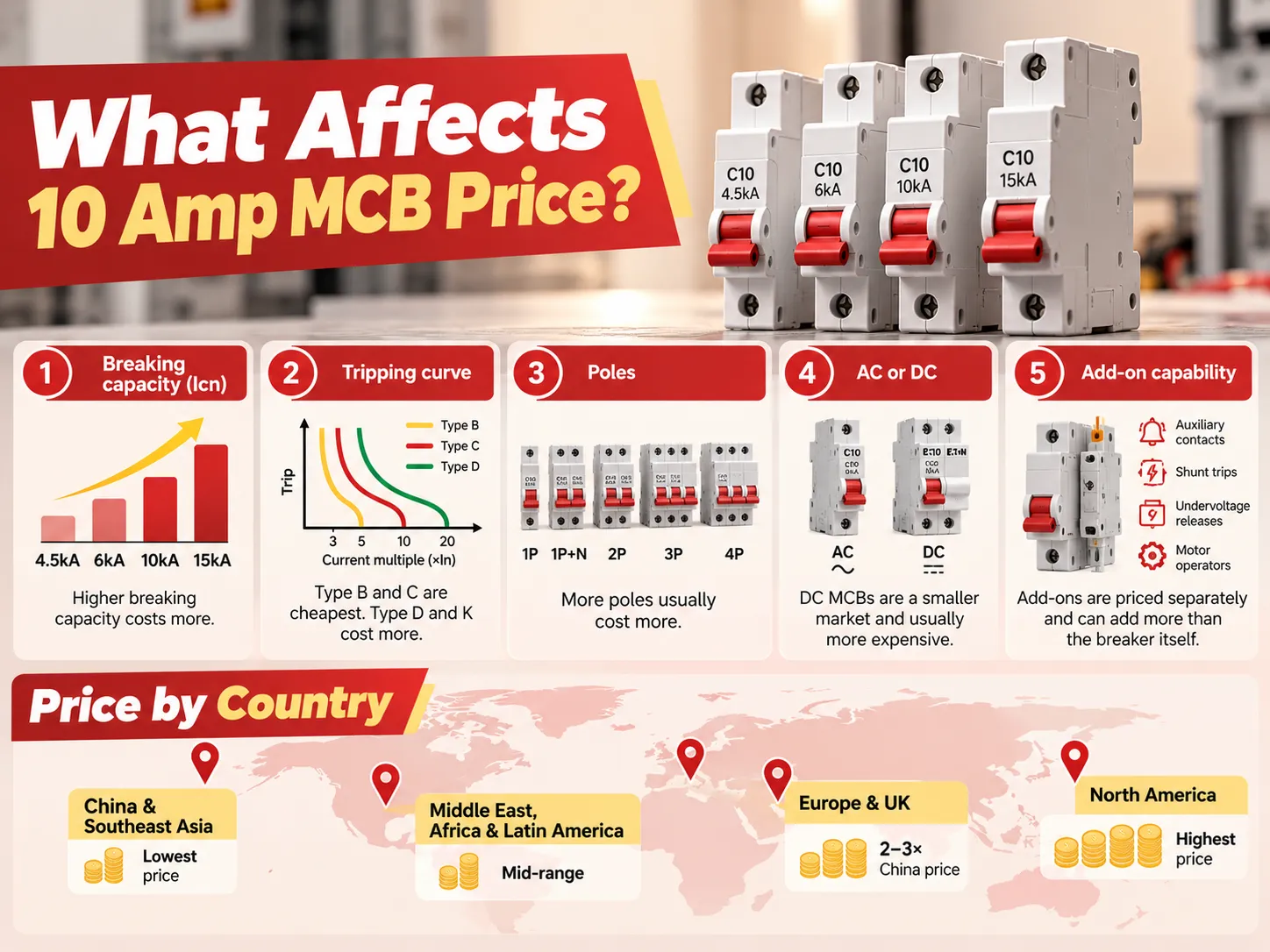
The discrepancies between two quotations for a “10 A MCB” are largely accounted for by five parameters.
- Breaking capacity (Icn). 4.5 kA / 6 kA / 10 kA / 15 kA. The increments of breaking capacity are invariably paid for in proportion to the prospective fault current at the installation site.
- Tripping curve. Type B operates at a current of 3-5 times its rating, Type C at 5-10, and Type D at 10-20. Types B and C are the cheapest and most commonly sold, while Types D and K attract a higher price because of more exacting requirements on tripping performance when exposed to high inrush currents.
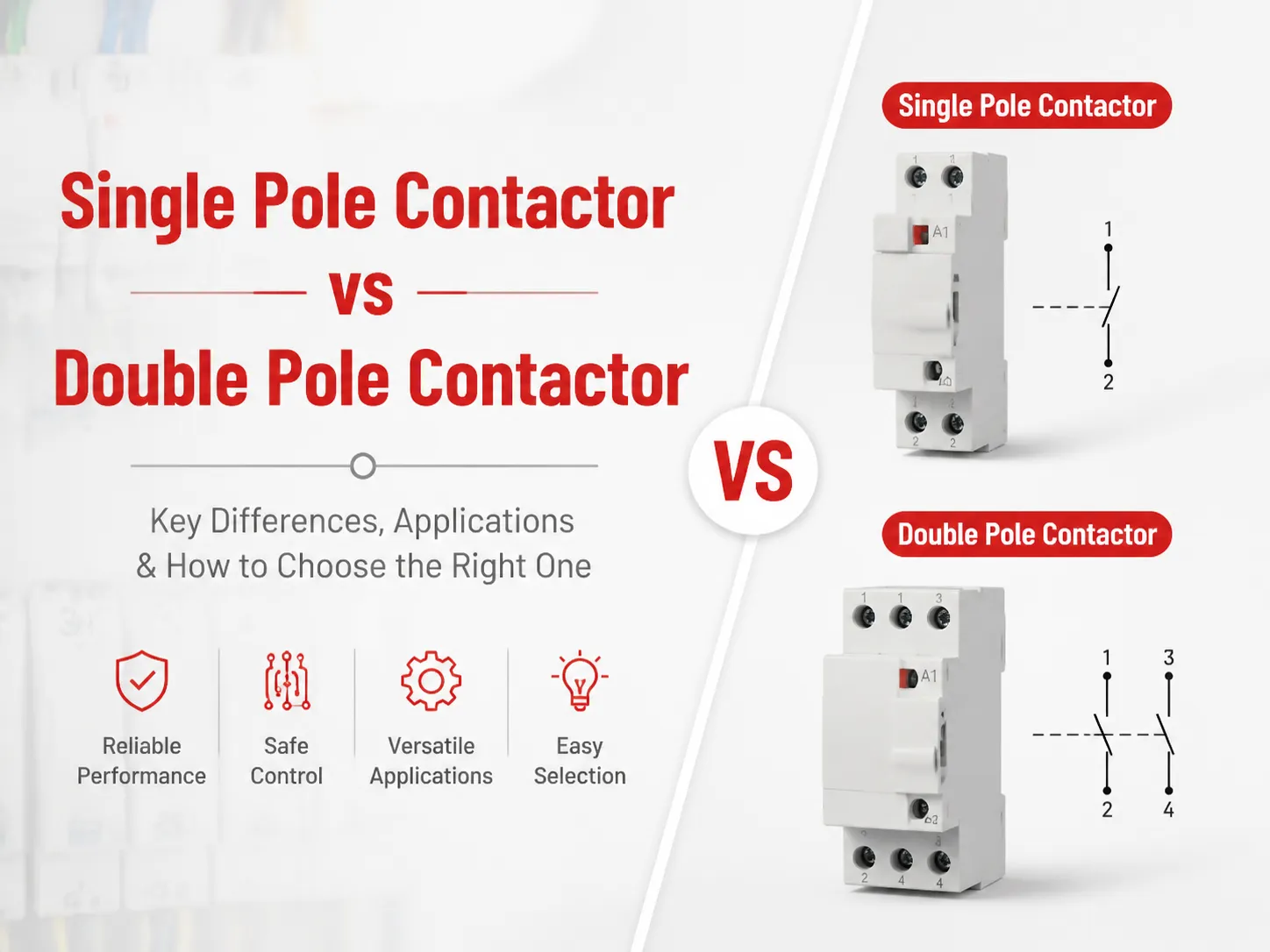
- Poles. 1P, 1P+N, 2P, 3P, 3P+N, 4P. While doubling the number of poles does not exactly double the price, as the mechanism is common for both devices, it does get close at the lower end.
- AC or DC. DC MCBs are used less often due to stringent requirements for arc extinction, and that is why a two-pole DC 250 V MCB costs more than a four-pole AC one.
- Add-ons. Additional features are priced separately and may contribute much more than the price of the breaker.
From the comparison above it is evident that if one quotation is cheaper than another one of the five parameters was worse than in the quotation that is more expensive, hence the correct question would be “how much is a 10 A, 1P, Type C, 10 kA, IEC 60898-1 MCB in packs of 180 pieces”.That is also the comparison that a specialist can actually quote against, as covered in this breakdown of what drives MCB pricing across pole configurations.
Price by Country
A same 10 A device is offered in different prices in distinct markets that are entirely unrelated to any circumstances concerning factory:
- China and Southeast Asia: here it has the lowest landed cost because bulk of production is based here. List prices resort to low single-digit dollars, while trade prices are significantly lower.
- Europe and the UK: here 10 A devices are typically higher priced, for this is determined by local stockholding, demand for certified mark and margin.
- North America: it has the highest price per unit, because of the fact that the rating of 10 A is a niche category in this region.
- Middle East, Africa and Latin America: prices of 10 A devices are between those in China and those in Europe. Import duty, freight and the margin of the importer make the cost of the product in this case quite insignificant in comparison to the landed price.
One practical consequence: in case you are formulating your specifications in the country where the rating is not common, you will face both product and time issue of higher pricing.
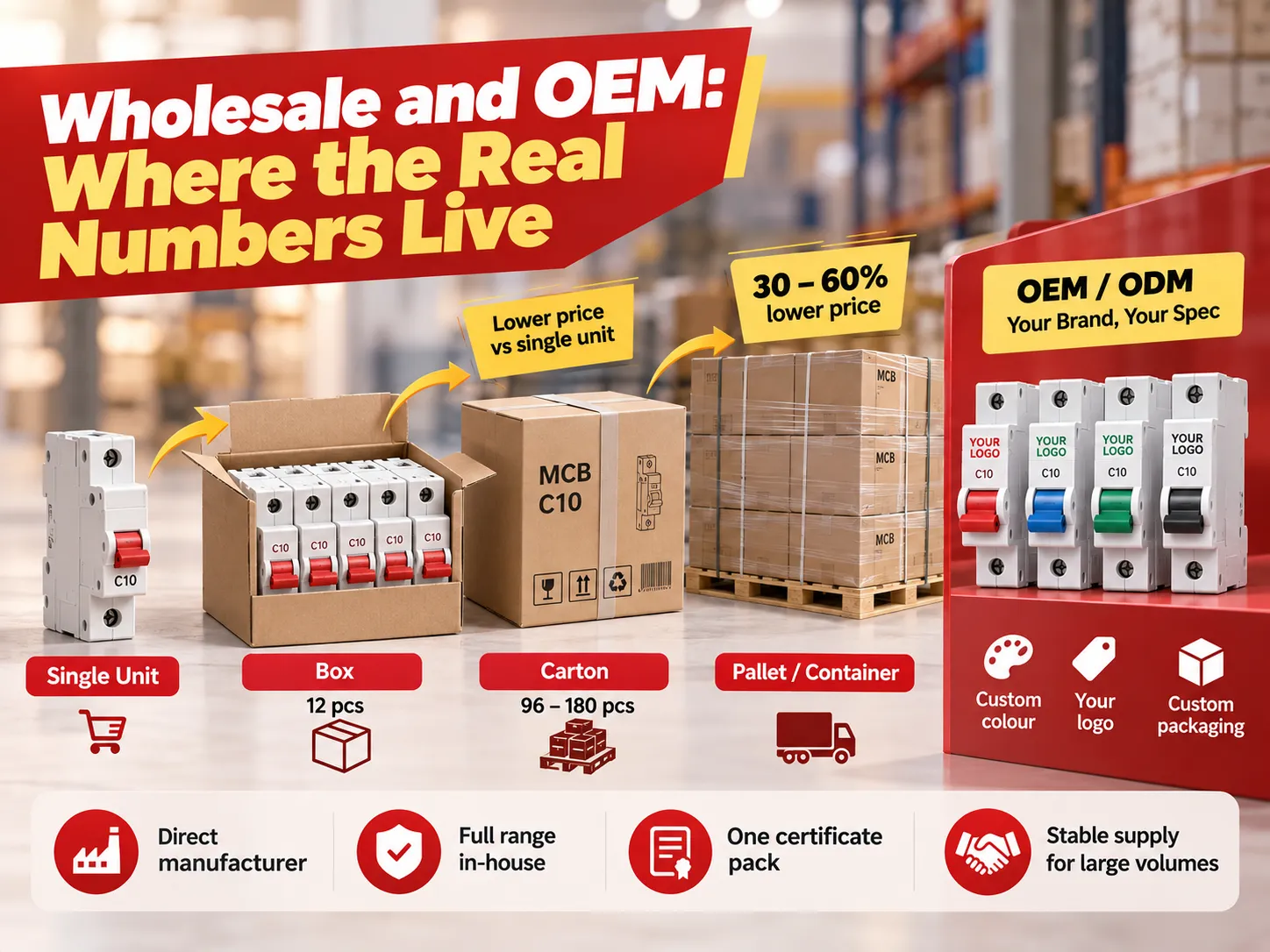
Wholesale and OEM: Where the Real Numbers Live
When large-scale buyers purchase MCBs, they usually do not buy them from retailers. The economics behind them change considerably at three levels or thresholds of sales.
The first threshold is carton. Domestic MCBs are sold in boxes of 12 units. The carton price is the first point where meaningful discounts are given. The second threshold is pallet or container. This is where most distributors buy MCBs and panel builders, and where discounts from the single unit price are between 30 and 60 percent, instead of exceptional. The third threshold is OEM. At this stage, the MCB is produced as per customer’s specifications and commercial terms are based on an annual volume commitment, not unit price.
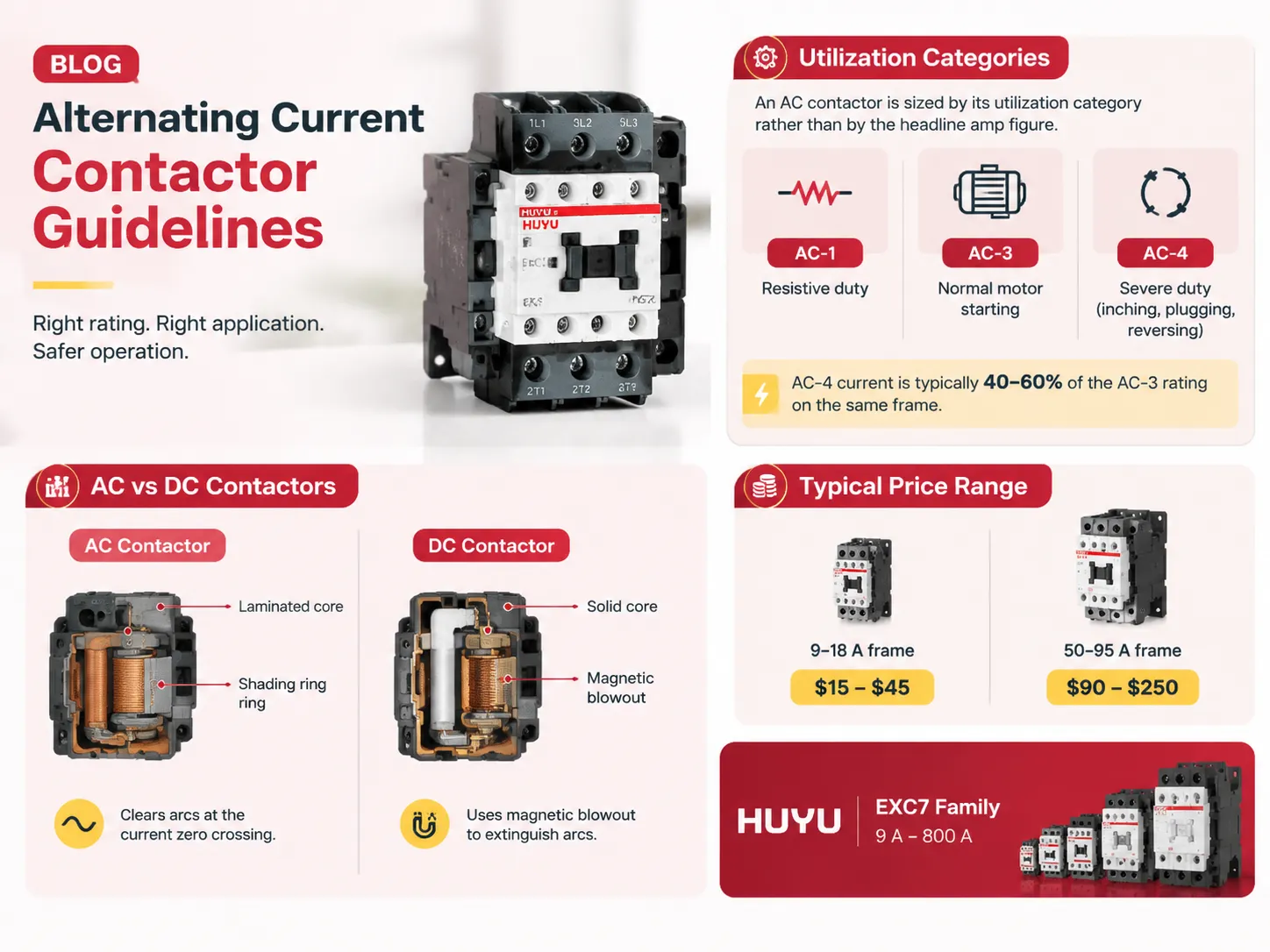
At this stage it can be said that the relationship between manufacturer and supplier is more advantageous than relationship between a manufacturer and a distributor.A supplier with its own tooling, its own test capability and its own export documentation can quote a full range on a single framework rather than sourcing each rating from a different trading house, which is the model behind an MCB manufacturer offering the full 1P–4P range from one production base.HUYU works on exactly that principle: MCBs, RCBOs, RCCBs, and contactors are manufactured in-house, involving wholesale levels from carton numbers through to an OEM/ODM service providing logo, packaging, and colour on committed annual volume. For a distributor, the practical advantage is one supplier, one package of certificates, and one lead time instead of five.
If you are new to private label sourcing, it is useful to learn the term in advance of negotiation. The difference between the trading house model and true factory OEM will only be revealed long after the quotation has been received, if something goes wrong with the batch, a certificate has to be renewed, or the lead time has been missed — the supplier’s ability to manufacture will determine which of the two you are actually dealing with.
What the Installed Cost Looks Like
The tooling price usually comprises the least amount of the entire work. The replacement of one ten-amp breaker in an existing panel requires about 15 minutes for a qualified electrician, and it is the labor minimum — generally an hour, with a call-out included — that is what you really will be paying. Typical figures for a like-for-like single breaker replacement land in the $75-$200 range in the United States; the part accounts for a small fraction of that, with most of it being the visit.
Panel work is a different scale altogether, and the reason people ask about breaker prices is they have often been quoted for something much larger. If a panel is being replaced rather than repaired, the driver becomes the assembly, the labour and the permit, which is the comparison covered in this look at what circuit breaker replacement costs and what sits behind the quote.
Cheap Versus Fair: How to Read a Low Quote
The fact that the price is low does not by itself indicate a problem. The volume brands are genuinely that cheap. There are some indications though, which are:
- No certificate pack. Always request the IEC 60898-1 testing certificate and the certificate number from the CB scheme for the series, not a picture of a certificate for a different product.
- Breaking capacity is also not suggested. If the quotation includes “10 A MCB” only, you do not know whether you are buying a circuit breaker with a breaking capacity of four and a half kA or of ten kA.
- Importer is unable to comment on carton ratio. It is impossible for a seller, who does not know how many goods are in a carton, to provide an actual landed cost.
- Counterfeit risk is not marked. The commonest complaint regarding cheap MCBs on contractor forums is not about their failures but about counterfeit goods that were sold under a well-known brand name. Always buy from authorized channels and check the batch code.
A good price is provided in case when all the five points regarding specification are there, and the certificate number is verifiable, while lead time is written.
FAQ
What is a 10A MCB used for?
The circuit is rated up to 10 A, perfect for 1.5 mm² circuit installed in accordance with IEC standards, this rating is widely used in panel control circuits supplying power to contactor coils, sensors, or small fans. The 10 A rating is not standard for branch circuits in North America and a 15 A rating is normally used.
How much does a 10 amp breaker cost?
A cost of $2-$5 should be anticipated for a low-end 1-pole 6 kA product, $8-$15 for an average label item, and $25-$45 for a premium or high-breaking-capacity product. Wholesale prices in carton lots can be 30 to 60% lower than retail prices for a single item. Once installation costs are figured, the total installation price will be two to four times that of the price of a device.
Which brand of MCB is best?
In most cases, the question is irrelevant. What is important is whether the product has obtained the certificate that is relevant for your country, is rated for the fault level that you have, and is manufactured by a company that sells spare parts. ABB, Schneider Electric, Siemens, Eaton, Legrand, and Hager are among those who have achieved the greatest number of certificates and local availability. Chint and Delixi are the best in terms of price while conforming to the recognized standards. In the case of sizeable purchases, a manufacturer with production facilities and OEM services can usually offer better delivered prices.
How much load can a 10 amp MCB take?
When at 230 V, 10 A equals 2,300 W under conditions of unity power factor, whereas under 120 V 10 A = 1200 W. As per many codes, the continuous rating should not exceed 80%. This means that one can consider about 8 A that equals about 1,840 W at 230 V. Electric inrush actually is a different matter: a Type B equipment is able to handle 3-5 rated currents, Type C 5-10, Type D 10-20.
References
- ABB — System pro M compact S200 and S200M miniature circuit breaker ranges, including the SH201-C10 and S201M-C10
- Schneider Electric — Acti9 iK60N and EA9 miniature circuit breaker catalogue data
- Siemens — SENTRON miniature circuit breaker portfolio and H20 series data sheets
- RS Components — published stock and bulk pricing for Eaton FAZ-C10/1-NA miniature circuit breakers
- Grainger — US trade pricing and availability for 1-pole miniature circuit breakers
- Alibaba — published wholesale price bands for CHINT NB1 C10, Delixi DZ47s and comparable ranges
- Hager — European miniature circuit breaker ranges and specification data
- International Electrotechnical Commission — IEC 60898-1 and IEC 60947-2, the standards governing MCB ratings and testing
Conclusion
An MCB of 10 amps is not just one price, it’s a range of prices where some would be at $2 while others at $45 all with the same capacity as the 10 amp MCB. The clear reason for the difference in price in my opinion is breaking capacity, certification, and channel. You need to decide the fault level you want to achieve, the quantity and the certification number. Follow these three steps and you’re sure to get a good price for the product.