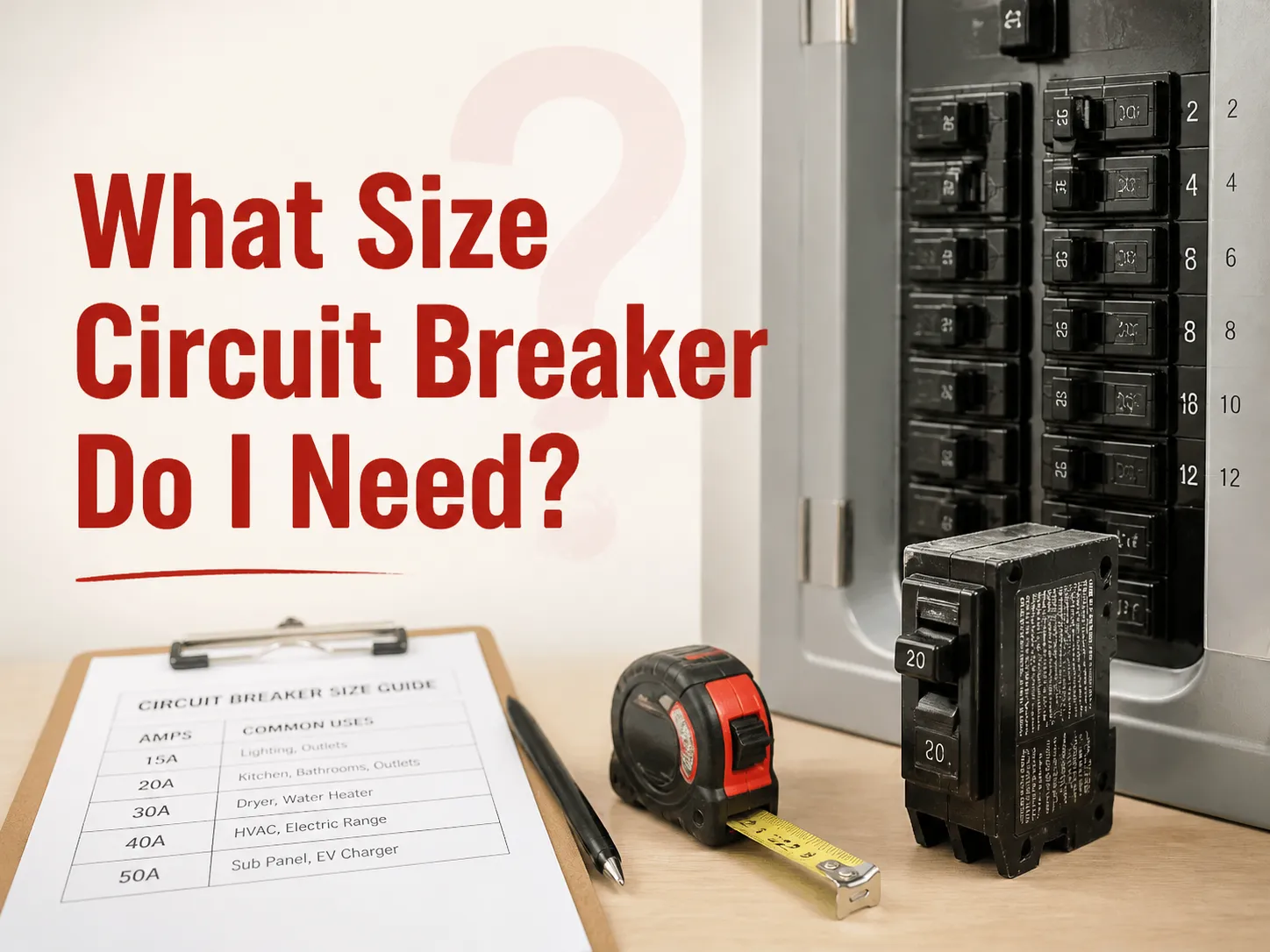


It shuts the power off as soon as a circuitry becomes overloaded. However, modern breaker boxes are also equipped with a more advanced type of protection: the arc detection breaker – this device works before the occurrence of short circuits and overloads and is capable of detecting a spark that travels across a damaged wire, poor connection, or broken cable and disabling the circuit before it leads to a fire. In the U.S. these devices are known as AFCI (arc-fault circuit interrupter) whereas they are referred to as AFDD (arc-fault detection device) in Europe in accordance with the IEC 62606 international standard. According to U.S. Fire Administration data, electric arcs belong to the major reason of 44,000 fire breakout incidents taking place annually, and the arc detection breakers are the only devices capable of avoiding fires caused by electric arcs.
This article presents the theory and working principle of arc detection breakers, as well as their purpose and distinguishing features from GFCI breakers and AFDDs, their types and applicability in terms of legal requirements.
In brief: Arc detector circuit breaker stands for the device that makes it possible to detect hazardous arcs in case of electrical malfunctions caused by damaged wires or cables or bad connections ensuring disconnection or interruption in just a few milliseconds after. AFCI devices meet the requirements of National Electric Codes (NEC) for most of the 120V residential circuits in the US, whereas AFCD is its equivalent in Europe. It should be mentioned that the so-called “combined” AFCI makes it possible to detect series and parallel arcs, that is, damaged circuit in any possible way. It is important to specify the fact that AFCI and GFCI devices should not be confused since they provide different kinds of protection: GFCI devices help people to avoid electric shocks, while AFCI devices ensure protection against fire in the building.
What Is an Arc Detector Breaker?
Electric arc detector circuit breakers are a type of circuit breaker that contains a circuit that detects arc faults and causes the circuit to trip when it detects them. Basically, these devices can be considered counterparts of the usual circuit breakers that provide protection against overloads and short circuits. While a standard circuit breaker will trip due to excess electric current, an arc fault circuit breaker will trip on account of dangerous electrical arcs, which would not draw much electrical current but generate a lot of heat.
There are two different names for the same concept. In the USA, this type of device is generally known as AFCI and called the arc detector circuit breaker in normal language. In Europe, it is called an arc fault detection device, according to the IEC 62606 standard, which may also be used in circuit breakers.

How It Works: Detecting the Arc Signature
An electrical arc refers to the flow of electricity through a gap, whether it is through air, through a damaged insulation, or through the loose terminals. Every electrical arc is characterized by two features: localized heat and erratic waveforms of the electric current because of which the electrical signal of the current is different from that of a typical load. The smart devices of the arc detector circuit receive and analyze electrical discharge and identify the presence of an arc by the presence of the high-frequency signal indicating the presence of the arcing.
Modern electrical devices that detect the arcs can identify two types of electrical discharge:
- Parallel arcs — are characterized by the flow of current either from the live wire to the neutral one or from the live wire to ground due to a damaged conductive wire.
- Series arcs — take place within a single conductive wire, for example, in case the wire loses contact with the terminals.
The response of an electrical device takes milliseconds that provide a chance for avoiding an ignition of a material close to an electrical conductor. The electronics of modern devices can even ignore benign arcing.
Key Features and Characteristics
- Identifies and prevents both kinds of arc faults, namely series and parallel faults (an integrated AFCI).
- Ensures usual overload and short-circuit protection — works similarly to a standard breaker with added electronic components.
- Takes less than a second to trip, meaning there’s no chance for ignition to occur.
- Comes in single-pole (15/20A, 120V), double-pole, and dual-purpose options (AFCI and GFCI).
- This breaker can be either plug-on neutral or pigtail neutral based on the type of panel.
- Many models incorporate the self-test function; meaning this breaker tests itself from time to time, as the regulations dictate.
- There’s a need of getting AFCIs compatible with the panel brands.
Where It’s Required and Recommended
According to the National Electric Code (NEC), in the United States, AFCI protection was required for the first time for bedrooms with 15A and 20A 120V branch circuits in 1999. Following code updates, AFCI protection has been extended to family rooms, dining rooms, living rooms, parlors, libraries, dens, sunrooms, recreation rooms, closets, halls, laundry areas, and kitchens. Consequently most residential 120V branch circuits require AFCI protection via AFCI breakers or special outlets (AFCI outlet) via first socket. Kitchens are fitted with dual-purpose breakers (AFCI and GFCI) since kitchen circuits require ground-fault protection too.
With respect to AFDDs, usage of those in Europe is not a regulatory requirement in most national wiring rules but is strongly recommended by the IEC 60364 guideline for the implementation in high-risk installations, such as sleeping rooms, rooms with a high risk of fire (such as sauna and storage of flammable materials), historic buildings, and buildings with wooden construction. A number of countries, such as Germany and the UK, are heading towards the increased usage of arc-fault protection in residential and commercial circuit breakers.
Installation and Wiring
The process of putting in an arc detector breaker is something done at the panel level. It involves fitting the breaker into its designated place in the panel, connecting the hot wire of the circuit to the breaker’s terminal, and connecting the neutral to the breaker by either using a pigtail or a plug-in neutral connection, depending on the brand of panel you are using. Working on an active panel presents some dangers and should only be done by a certified electrician, unless the installer has a good amount of experience with panel work. The professional installation price (typically between $175 and $300 a circuit, including the breaker) is well worth it because it provides peace of mind knowing the work is done according to code and also helps find the right breaker type for the panel.
Before making your purchase, check two things: the brand and series of the panel (Eaton BR and Eaton CH, Square D QO and Square D Homeline, Siemens, Leviton, and GE being incompatible), the amp rating (15A vs 20A) and the new connection type (pigtail vs plug-on neutral).A mismatched breaker is both a code violation and a safety hazard — our guide to UL 489 breaker standards explains the certification and compatibility rules, and the breaker failure detection guide covers what to do if a breaker misbehaves after install.

AFCI vs GFCI: What’s the Difference?
The meanings of these two abbreviations are often mixed up because they are simple yet quite significant:
| Feature | AFCI (arc detector) | GFCI (ground fault) |
|---|---|---|
| Protects against | Arc faults — sparking from damaged wires and loose connections | Ground faults — current leaking to ground through a person or water |
| Primary purpose | Prevent electrical fires | Prevent electric shock |
| Detection method | High-frequency arc signature in the current waveform | Imbalance between hot and neutral current (4-6 mA threshold) |
| Typical locations | Bedrooms, living areas, kitchens (NEC 210.12) | Bathrooms, kitchens, outdoors, garages (NEC 210.8) |
| Can be combined | Yes — dual-function AFCI/GFCI breakers do both | |
The two categories of device that every modern home needs are represented in that GFCI can prevent users from getting an electric shock, in case water comes in contact with electricity, while AFCI ensures that there will be no fire due to excessive arcing. In kitchen and laundries, nowadays, dual-purpose breakers do both simultaneously.
Our GFCI explainer covers the ground-fault side in detail, and the MCB vs MCCB comparison shows where arc-detector breakers fit in the broader breaker family.
AFCI vs AFDD: US and European Terminology
This means that, in terms of their functionalities, AFCI (North America) and AFDD (Europe) are actually the same device — arc fault detector as it disconnects the circuit when arc arises. Despite the fact that the principles of the invention are the same, the AFCI meets regulatory requirements set by NEC 210.12 and possesses UL 1699 certificate, while AFDD satisfies IEC 62606 standard and is normally presented in the form of a DIN-rail module or a combination of DIN-rail module with MCB sold in Europe. AFCIs are mostly mounted into the circuit panel, while AFDD often comes already combined with MCB. When the specs mention both abbreviations, it means that there is, in fact, the same device that meets the safety standards applied in different countries.
Types of Arc-Fault Protection
- Branch or feeder AFCI is the initial type that has been made for parallel arcs but has become outdated, with combination types taking its place.
- Combination AFCI stands for the optimal choice of today (UL 1699) capable of the detection of both series and parallel arcs, hence when someone says ‘AFCI breaker’, they are referring to this type.
- AFCI outlet (socket) stands for the arc protection device situated at the first outlet; the device secures all the following sockets downstream; it is the best solution if it is impossible to apply the panel-level AFCI.
- Dual-function AFCI/GFCI is one the type of circuit breaker that is providing protection both from the arc and fault currents and is usually found within kitchens and laundries.
- AFDD (IEC 62606) is the implementation of the DIN-rail type in Europe which can be used as an independent device or be combined with an MCB.
Do You Need One?
Whether it is new building, re-wiring, or circuit installation in a property based in the US, the code stipulates that most of 120V branch circuits require AFCI protection, whether one likes it or not. In case you have an older house with a traditional panel, there is no grandfathering clause requiring retrofitting, but the case for fire safety is convincing: arcing faults due to old wiring, cables nailed down, and loose connections have become one of the biggest causes of electrical fires in homes, with tens of thousands of such fires annually reported by the US Fire Administration. Installation of AFCI breakers on hazardous circuits (bedrooms, living rooms, high-voltage circuits that utilize old or damaged wiring) conflates with one of the most lucrative electricity improvements, costing several hundred dollars per circuit for protection that no other device offers. In case the panel is old or associated with a history of failures, there is every reason to replace it with a modern panel equipped with AFCI/GFCI breakers.
Brands and Prices
Breaker types are specific to breaker types. Below are some of the most major arc-fault breaker brands and their associated costs:
| Brand / Line | Panel Compatibility | Typical AFCI Part Price |
|---|---|---|
| Square D QO | QO panels | $40-70 (single-pole combination) |
| Square D Homeline | Homeline panels | $40-55 |
| Eaton BR | BR / type BR panels | $30-60 |
| Eaton CH | CH / type CH panels | $39-58 |
| Siemens | Siemens panels | $36-65 |
| Leviton | Leviton panels | $42-46 (plus smart breaker line at $60-150+) |
| GE | GE / Q-line panels | $39-47 |
| Dual-function AFCI/GFCI | Varies by brand | $45-90 |
| 2-pole AFCI (240V) | Varies by brand | $104-208 |
The cost of the actual arc-fault breaker itself is typically in the range of $25-90 (for a single-pole combination unit of arc-fault breaker). The installed price, which includes the cost of the part as well as labor from a licensed electrician, comes to approximately $175-300 per circuit (which includes part + manpower + transportation). The prices of dual-function breakers tends to run slightly more.For comparison, our 15-amp circuit capacity guide helps you confirm the right breaker rating for each circuit before you buy.
Frequently Asked Questions
Do I really need arc fault breakers?
In the United States, the answer is affirmative—the National Electrical Code (NEC) 210.12 states the need for AFCI protection for most residential branch circuits operated on 15/20A with 120V, which includes living areas, bedrooms, laundry, dining area, and kitchen. However, there are no retrofitting requirements for existing old homes, despite the fact that there is a substantial benefit in terms of safety from fire that can arise from arc faults which are caused by damaged or old wiring.
Should a refrigerator be on an AFCI breaker?
In new buildings and constructions, refrigerators tend to be plugged to a circuit of the kitchen that needs AFCI protection (NEC 210.12). Hence, it is a yes from this perspective as well, since the fridge will be plugged to an AFCI; usually to a dual-function AFCI/GFCI. Over time, the combination ACI hardly causes refrigerator malfunctioning. In the case of malfunction, it most probably means that there exists some issue: for example, a failing cord or compressor contacts.
Will a microwave trip an AFCI breaker?
The answer again lies in the fact that it can only happen due to malfunction. Thus, the microwave doesn’t put a strain on a combination AFCI. If the microwave experiences problems related to internal contacts, for instance, it can trip the breaker with the arc fault. In the past, first-generation AFCIs were known to be less resistant to trips, however, the combination type is more performant today.
Can I replace my arc fault breaker with a regular breaker?
If the circuit requires AFCI protection, it is a very bad idea to replace AFCI with a standard breaker. Otherwise, it will still cause deviations from the fire safety of the circuit, which can be marked during a proper inspection.
References
- Switchgear Factory — Circuit breaker cost guide (AFCI/GFCI pricing and brands)
- Costopedia — How much does an AFCI breaker cost?
- RES LLC Store — Arc fault breaker catalog with live pricing
- Home Depot — AFCI breaker pricing (Eaton, Siemens, Leviton)
- NFPA 70 — National Electrical Code (Article 210.12 AFCI requirements)
Conclusion
Arc detector breakers are fire-prevention tools that help in a situation when normal circuit breakers are unable to provide protection because they do not respond until the circuit is overloaded but rather wait for the sound of a spark, which can signify either a wire that needs repair, a faulty relay, or an electrical device with defective wires attached. They are known as arc fault circuit interrupters (AFCI) and arc fault detection devices (AFDD). Its advantages mean that its use is made compulsory under the NEC 210.12 for residential wiring in North America, IEC 62606 in Europe, and it is recommended in all circuits that may be considered dangerous due to age of wiring or otherwise. It is worth mentioning that arc detector should not be confused with GFCI technology available to provide electric shocks protection, as the arc detector is intended to protect the building against fire, however, nowadays some brands have created dual-functionality devices enabling the use of both technologies. Its cost ranges from $25 to $90 per breaker plus installation charge of approximately $175 to $300.